I'm Afraid Of Americans
Some thoughts ten years after David Bowie's death +reviews of Tha God Fahim x Nicholas Craven, Mr. Dibbs

Shortly after David Bowie passed away, ten years ago today, entertainment media outlets commenced with publishing pieces that essentially capitalized on his fandom's collective mourning. Distinct from the professional obituaries and well-sourced remembrances from those who knew him in life were expediently issued listicles with titles like 8 RAP SONGS THAT SAMPLED DAVID BOWIE [Billboard] and NINE AWESOME DAVID BOWIE REMIXES [Mixmag]. Some outlets doled out personal essays from music journos and critics, taking to the first person to convey what his music or creative expression meant to them. Others rounded up quotes from artists and celebrities whose own work was informed, inspired, or otherwise impacted by Bowie's catalog.
At the time, I found the whole enterprise pretty fucking grim.
While such writers, staff and freelance alike, either do the work they've been assigned or pitch stories that meet the perceived need of such moments, it's something I actively avoided during my time writing for such publications. I've turned down editors who slid into my DMs or my email inbox to reverse-pitch me, including at times when it was downright financially irresponsible for me to wave off paying work. Though my morality is far from perfect, having been around long enough to regret certain blurted takes of mine, I've long been vocal in my opposition to this category of coverage:
Freelance writer Gary Suarez thinks most mainstream media content following a person’s death is a crass play for clicks, capitalizing on a deceased figure’s cultural impact to reel in readers. He refers to this simply as “death content.”
“Where ‘death content’ comes into play is that it exists solely for the purpose of having something out there,” explained Suarez. He differentiates this from short news pieces or Times-style obits sharing information of a person’s passing, which serve clear functions as news pieces. “It’s this desire to build buzz-worthy content, build listicles, off of someone’s death that just seems wholly gross to me.”
Suarez points to the unsavory economic model that governs the majority of modern digital media outlets. “The metrics that drive these sites create this sort of culture,” he said. “Especially if we think that someone’s art or work has value, we can’t be approaching it with the same sort of mechanical approach that we do other forms of content. That’s not the wave.”
Though I've softened some of my stances as my beard has steadily greyed, I still hold the position that I'd rather celebrate and explore an artist's music during their life rather than put proverbial pen to paper in the immediate aftermath of their death.
A respectful R.I.P. post on social media, or a share of a song/video by the deceased to my followers, remains perfectly acceptable for me to do. But generally I'd prefer to wait and gather some distance from the passing when considering doing some writing about their absence. To me, if there's worth saying of length or substance about a departed artist, it should still matter and benefit readers further down the line from a tragically timely news peg. And in viewing with a contemporary gaze some of the stuff peers of mine wrote post Bowie's death in January of 2016, I honestly can't say a lot of it holds up beyond sentimentality.
(Inadvertently, I also found myself quite saddened by this exercise of looking back at this decade-old coverage. Some of these outlets don't exist anymore, or have been scaled back and gutted to the point of functional irrelevance by bad corporate leadership and venture capital plunder. I wondered to myself over a few bylines that used to appear constantly but now have seemingly dropped out. Though it had myriad flaws and even cruelties, the culture writing ecosystem of 2016 was a period of abundant feast compared with today's accelerating famine.)
Bowie's music mattered a great deal to me, across eras, but maybe none more so than the period spanning 1995's Outside and its 1997 successor Earthling. I was your prototypical angsty teen, a bit too smart for his own good and a bit too smug about his musical tastes. Having graduated from my parents' record cabinet of '60s and '70s classic rock, as well as my own inevitable if somewhat embarrassing embrace of pop in the 1980s and early 1990s, what remained by the decade's midsection was a kid craving extremity.
By then, hip-hop and heavy metal had already been an established part of my diet, but my black-hearted love for industrial music was then in full swing. It makes sense when you consider how much this music at the time borrowed or, less affectionately, plundered from both genres, via the purloined guitar riffage and maximalist boom bap overdrive employed by acts like Front Line Assembly and KMFDM. (To be clear, industrial's evolution depended on Adrian Sherwood's fortuitous collaborations with members of the Sugar Hill Records house band like Keith LeBlanc and Doug Wimbish–a topic for another newsletter.) We were still nearly two decades away from The Money Store and Yeezus, but the foundation was there and evident to those willing to listen for it.
The ascent of Nine Inch Nails into the mainstream shocked those of us who'd fixated on Pretty Hate Machine and the Broken/Fixed EPs, but the well-executed vision of hell on The Downward Spiral sounded altogether remote from our deeply held notions about selling out. Thus, when Bowie's hip-hop informed 1995 single "The Hearts Filthy Lesson" scored a Trent Reznor remix, all the pieces began to fit in place. The elder statesman of alternative would headline a North American tour that Fall with NIN as the opening act, a move that proved controversial for many in their disparate fanbases.
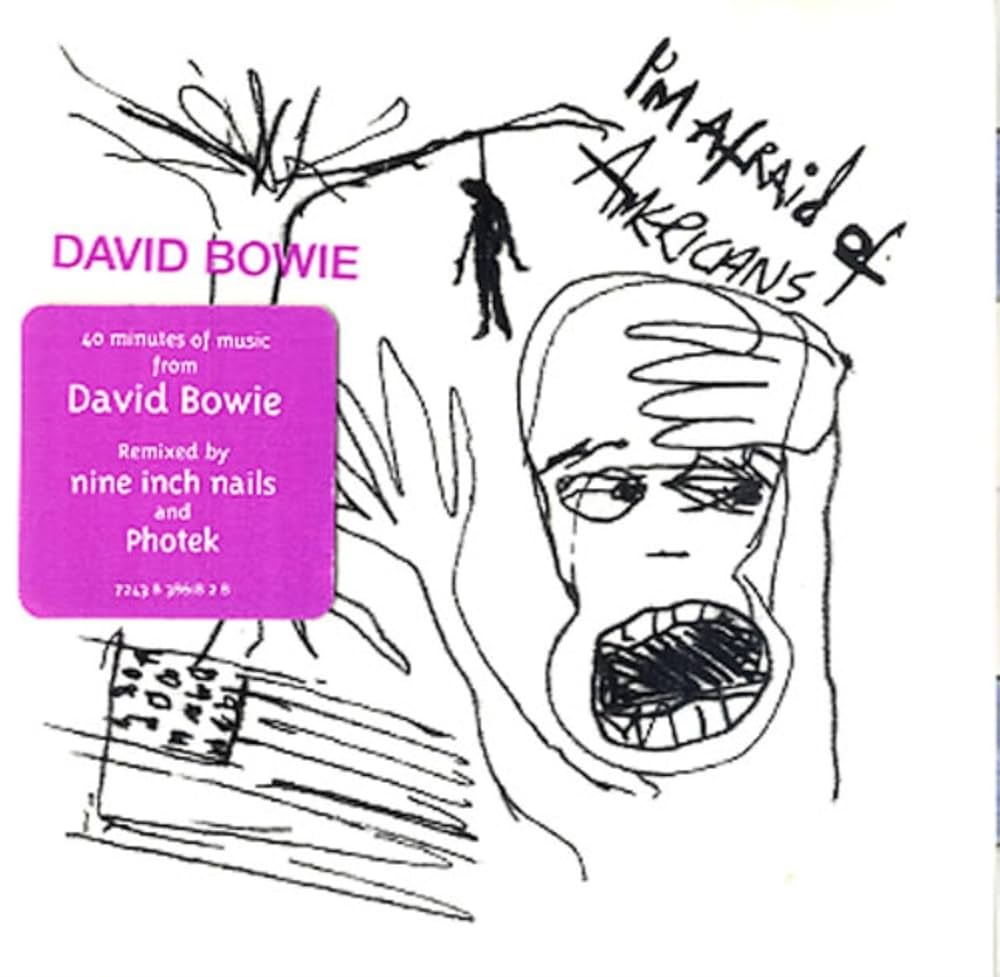
Though Outside came as close to a David Bowie industrial album as we ever got, Earthling's arrival a year-and-a-half later showed how his time on the road with NIN affected his own work. In contrast with full-length's raven electronica forays, the album version of "I'm Afraid Of Americans" revisited the inherent hip-hop underpinnings of "The Hearts Filthy Lesson" and gave them an alarming synth rock jolt, while NINs' welcome commandeering of the maxi-single added even more intensity and grit to five out of the six versions. (Reznor prominently appeared in the album's MTV-rotated music video for the hit single, which peaked at No. 66 on the Billboard Hot 100.)
One of these takes included none other than Ice Cube himself, his vocals sampled, cut-up, and reassembled. His presence on the nasty, clamorous, and decidedly non-commercial "I'm Afraid Of Americans V3" subtly acknowledged the then-unspoken debt industrial music owed to his chosen genre. While so many 2016 music journos reflexively fixated on how Bowie's "Fame" and "Let's Dance" inspired plenty of rapper moments and pop-rap chart sensations, real heads knew just how deep the rabbit hole went.
Tha God Fahim & Nicholas Craven, Ultimate Dump Gawd 2
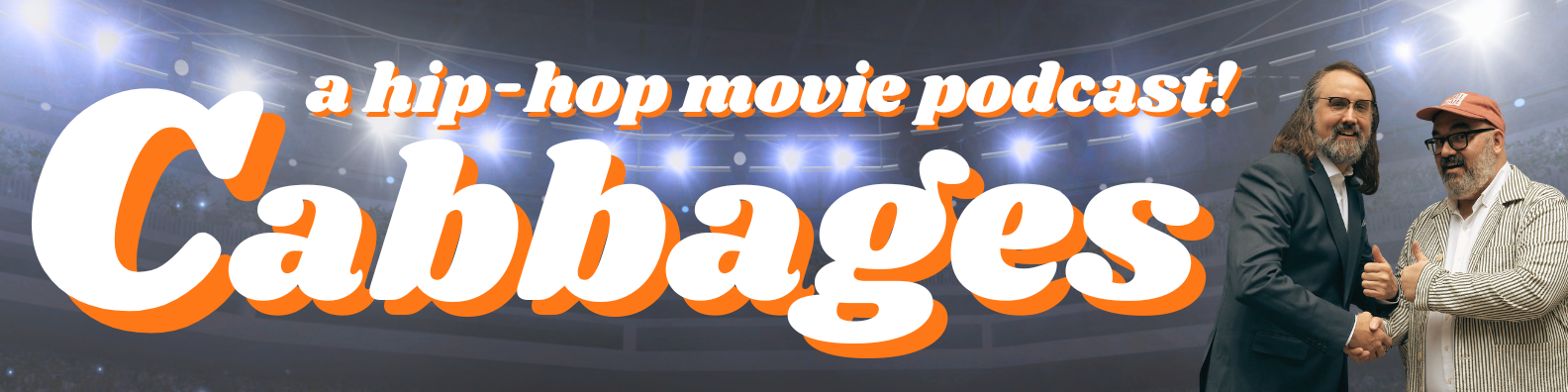
Boldy James fans already understand what Nicholas Craven brings to the table, but that's old news for followers of Tha God Fahim. The prolific Atlanta rapper's substantial output with the sample savvy Quebecois producer goes back nearly a decade, starting with beat placements and evolving into fruitful project-based pairings. Compiling and, notably, remastering 11 choice cuts from the duo's Dump Gawd: Hyperbolic Time Chamber Rap volumes 5 through 8, Ultimate Dump Gawd 2 provides an opportune entry point into the world they've built together. On tracks like "Crimes Against Humanity" and the advisory "Not Tha Only One," Fahim's loose, almost conversational flow makes nearly every verse feel like an off-the-dome freestyle, though the elaborate nature of the contents consistently indicates considerable forethought. Craven, as usual, pulls rare gems out of the depths of his crates to set the mood right, from the easy listening jazz derived "Blk Luster S" to the vinyl crackling "Crusher." The sole feature here, Big Cheeko kicks off "Tha Way" with silky smooth cool before his host bursts like Kool-Aid Man through the sparkling groove.
Mr. Dibbs, Ohio Dirt
While technically new to the Strange Famous roster, Mr. Dibbs boasts decades of experience in the independent hip-hop underground. In tandem with rappers like Doseone, El-P and Sage Francis, as well on as his own projects, the storied Scribble Jam co-founder's dextrous hands previously touched the label discographies of Def Jux, Mush, and Rhymesayers, among others. Divided into two even sides, Ohio Dirt takes listeners on a speaker-rattling trip through turntable tumult and dark whimsy. The cavernous, unruly dub that sparks "S'curity" morphs steadily into kinetic, voltaic expressions of boom bap and skittish breakbeats. He scratches samples both familiar and obscure into inscrutable textures, the sputtering vocal debris adding to the routine's rhythmic tension. "Speedbeard" gets even twistier, indulging the flip side's more granular impulses in a sinuous manner recalling turn-of-the-century glitch-hop. Like a recovered pirate radio transmission from the earliest aughts, the sequence relishes in sonic detritus and haphazard groove.

Three new tracks to snack on...
Lexa Gates, "Estranged"
Nyeusi Loe, "EDOTFLAME"
Chyna Streetz & 183rd, "Close Up"