The 2026-Sized Hole In Jay-Z's Yankee Stadium "Takeover"
Why one of the Brooklyn rapper's most notorious tracks wasn't played at The Blueprint's JAŸ-Z 25 celebration
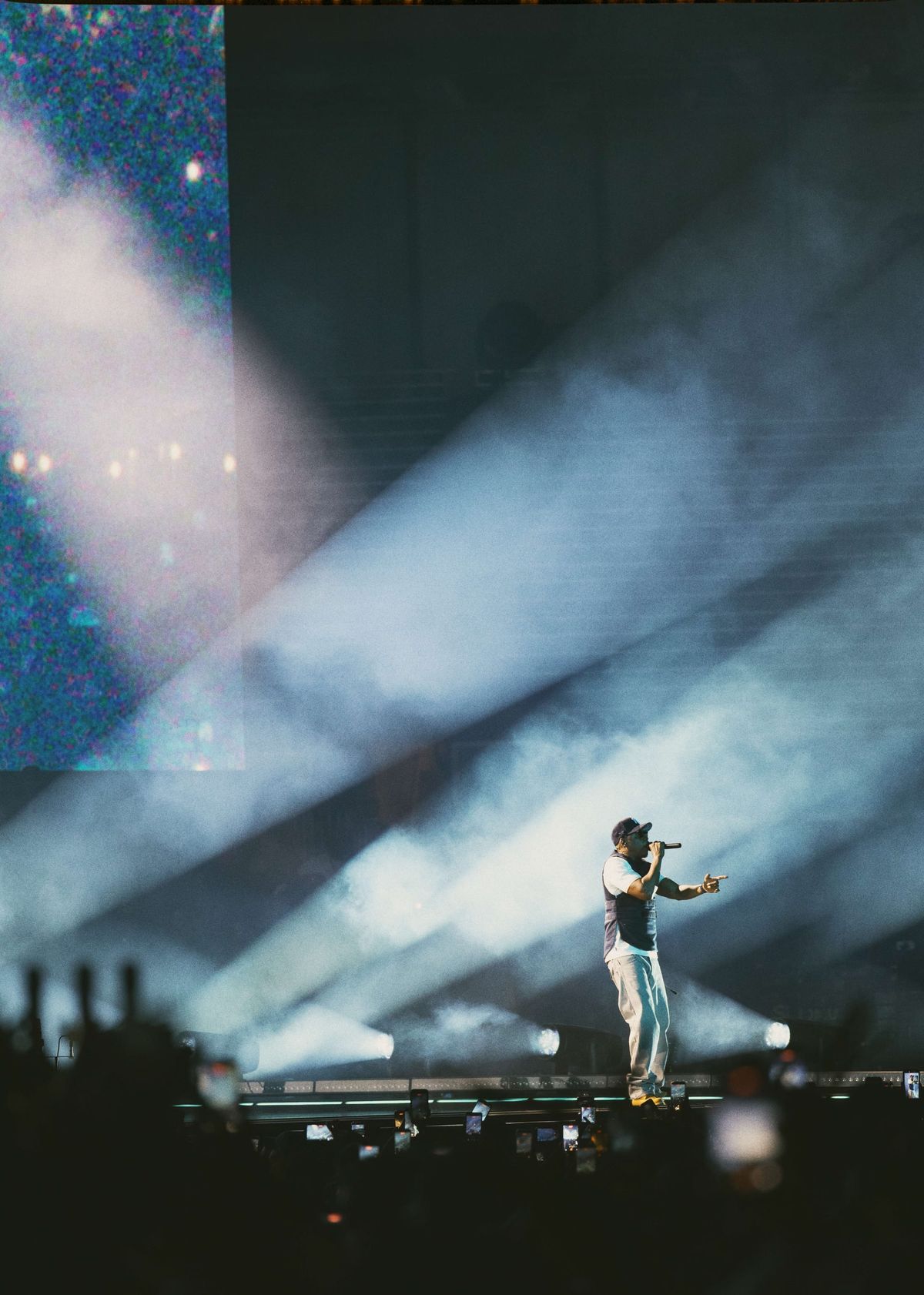
If you came to Jay-Z's second night of Yankee Stadium concerts expecting to hear The Blueprint in full, you should've known better.
Over the weekend, the 56-year-old rap superstar put on a three-day celebration of self at his home city's best known ballpark, with Saturday's idiomatically umlauted JAŸ-Z 25 event specifically billed to mark the quarter-century anniversary of his seminal 2001 album. That evening, the buzz among attendees and those speculating from home seemingly had to do with whether or not his fellow "Renegade" Eminem would appear on stage, which he ultimately did.
Yet while that set began auspiciously with album opener "The Ruler's Back," it then diverged into a welcome Slick Rick guest appearance and soon skipped to track three, "Izzo (H.O.V.A)." Passed over, of course, was "Takeover," Jay-Z's cleverly crafted diatribe against his contemporaneous rap foes Nas and Prodigy.
Built off then-rising producer Kanye West flipping The Doors' "Five To One," the lengthy, vitriolic cut laid into two of Queensbridge's finest with mafia don bravado. As the second song on The Blueprint–much discussed at the time of its Roc-A-Fella Records release even amid the grave aftermath of the September 11th attacks–its prominent placement in the track listing arguably supplanted "The Ruler's Back," with fans assuredly skipping ahead to the juicy gossip and devastating bars that make "Takeover" one of the best diss tracks in hip-hop history.
In his assessment of the Bronx weekender, the New York Times' Jon Caramanica addressed the omission as an act of discretion, existing somewhere on a spectrum between "maturity" and "pragmatism." A veteran rap critic whose years with Vibe and XXL align with Jay-Z's pivot to G.O.A.T. contention and pop culture ubiquity, he knows without needing to spell it out that the homophobia lyrically laced into its verses disqualifies "Takeover" from appearing in a 2026 set from the business(man), lest they impact his lucrative deals.
Furthermore, offending Nas, who performed at Friday's Reasonable Doubt night (aka JAŸ-Z 30) in defiant Mets gear, doesn't jibe with Shawn Carter's present-day personal brand. Why would he burn bridges with his rapper-capitalist twin, whose own grown-up portfolio of ventures and investments include casinos and tech firms? Instead, as should be expected from the billionaire class, the Roc Nation mogul directed his ire towards those who dared to question the ethics or optics of his working with boycott besieged Target, retorting with nauseating false equivalence and an apparent Colin Kaepernick dig in freestyle form.
Hectoring an absent online bogeyman in a venue filled with ticketed loyalists who'd paid hundreds to be there feels on par with what Jay-Z has come to represent for certain jaded older fans and those too young to have experienced the rapper in his flashy, hit-making prime. His most recent solo album, 2017's 4:44, dropped as a promotional gift for Sprint mobile subscribers and played like a financial literacy seminar conducted at the hotel near the airport. (As I wrote at the time, "[i]f being lectured by a multi-millionaire about why you’re still poor is your fetish, there you go.") Like Elon Musk or Peter Thiel or any other household name billionaires, he's taken to defensively presenting himself as above reproach from the public, time and time again.
Much of hip-hop culture is comprised of the stories we tell ourselves. And oftentimes those tales just so happen to be the ones that got through the filters of media and became accepted lore. Listening to "Takeover" or its similarly brutal counterstrike "Ether," it doesn't matter that Jay-Z and Nas effectively quashed their beef more than two decades ago. The narrative of that rivalry remains unchanged because of the way people consumed it back then–and how easily they still can now. (If nothing else, J. Cole's controversial decision to retroactively remove "7 Minute Drill" from 2024's presciently titled Might Delete Later insulated him from worst of the Drake vs. Kendrick saga, then and now and perhaps in perpetuity.)
Fans who spun The Blueprint in anticipation for the Yankee Stadium shows probably didn't skip "Takeover" when doing so. And why should they? Ahead of Max B's homecoming concerts at Brooklyn Paramount this year, I repeatedly streamed "She Touched It In Miami" and his feature on Cam'ron's Jay-Z diss "You Gotta Love It" knowing damn well he wouldn't be performing them live. But these are songs that exist as part of our fandom, woven into our justifications for loving or admiring these artists.
Beef has historically had its casualties, to be sure, and a younger generation of rappers in particular seem determined to bypass the pen and reach immediately for the proverbial sword. Unpacking that latter bit requires much more than a paragraph, but the suffocating tragedy of that chilling reality makes a war of words like "Takeover" vs. "Ether" feel like the platonic ideal. That Jay-Z and Nas could, at their big ages, continue to look past their prior barbs and perform together for tens of thousands of people is a fucking gift.
And still, there's this impish hypothetical question nagging at me: what if Jay-Z had played "Takeover" on Saturday night? The fan reaction would have been tremendous, I suspect, with his words echoing back at him from every tier of Yankee Stadium in raucous, caustic chorus. That he and Nas are no longer rivals–outside of, say, the casino business–could've potentially permitted him to simply honor the spirit of the evening's anniversary festivities and mark the moment with unfiltered nostalgia.
Instead, the song's exclusion from the set created an artificial hole that everyone in attendance could feel if not see or hear. Alternatively, he could filled that conspicuous space with a new freestyle over said beat. The lyrics could have been modified for the occasion as well, as even a truncated single-verse interpretation of the track would've given attendees an acknowledgment both of its place in Jay-Z's canon and of their relationship with it.
Yes, some would have considered a "Takeover" performance in poor taste, what with Nas' absence from the JAŸ-Z 25 guest list and Prodigy's passing in 2017. Speaking ill of the dead is still generally considered gauche, and the 2025 release of Mobb Deep's posthumous Infinite LP via Nas' Mass Appeal Records further bolstered the departed's legendary status. Backlash of some sort would likely result, even if no ill will were intended. And like with any other controversy that's come his way of late, Jay-Z would brush it off like shoulder dirt.
Then again, if we want to get granular about it, "Takeover" still resides on streaming platforms, a monetized click away for just about anyone with Internet access. Jay-Z continues to profit off of our ongoing consumption of it, and despite provocative contents that would be deemed disrespectful were he to perform it live, no one (including myself) seems all that driven to demand its removal from Spotify or Tidal ex post facto. Conversely, he wouldn't have made any additional money on Saturday night by including that song in the JAŸ-Z 25 setlist, which sadly is the most compelling argument as to why he left it off.

Three new tracks to snack on...
The Koreatown Oddity, "Ragu & Prego"
Open Mike Eagle & Kenny Segal, "Watching A Movie Called Freedom By Myself"
ECID, "Nemesis With Benefits"