Nothing (R) Compares 2 U, Navy Blue
Adventures in audio tech, where the new product rollout is also an artist salon.

Amid the barrage of utterly grim news stories about AI infiltrating every aspect of music, beyond the desperate outrage induced by everything from sleazy slop cover art to generative boogies made by bogus bots, I found humanity in an otherwise hopeless place: the rink level at Rockefeller Center.
If you venture deep down into the bronzed bowels of this NBC-branded tourist trap, circumvent the pricey eateries and Top Of The Rock temptations, suppress the inaudible yet invasive hum of Tishman Speyer's disorienting liminal 2020s refurb, and meticulously follow an uncharacteristically colorful series of arrowed signage, you'll hopefully end up at HERO. A stark contrast from the 90 year old ice skating "pond" outside that won't even re-open for another two weeks, this so-called "venue for immersive storytelling" indoors debuted just shy of three years ago. It is all of the lights and sound and somehow, also, the lack thereof, a synthetically experiential third space that promises multi-sensory audiovisual thrills galore for 23 bucks a pop. Why, in the very near future, HERO will proudly house The Elf Experience, "from the creative minds behind the beloved New Line Cinema film," with advance general admission tickets ranging between $45 and $59 per person.
This particular night, however, was a rental.
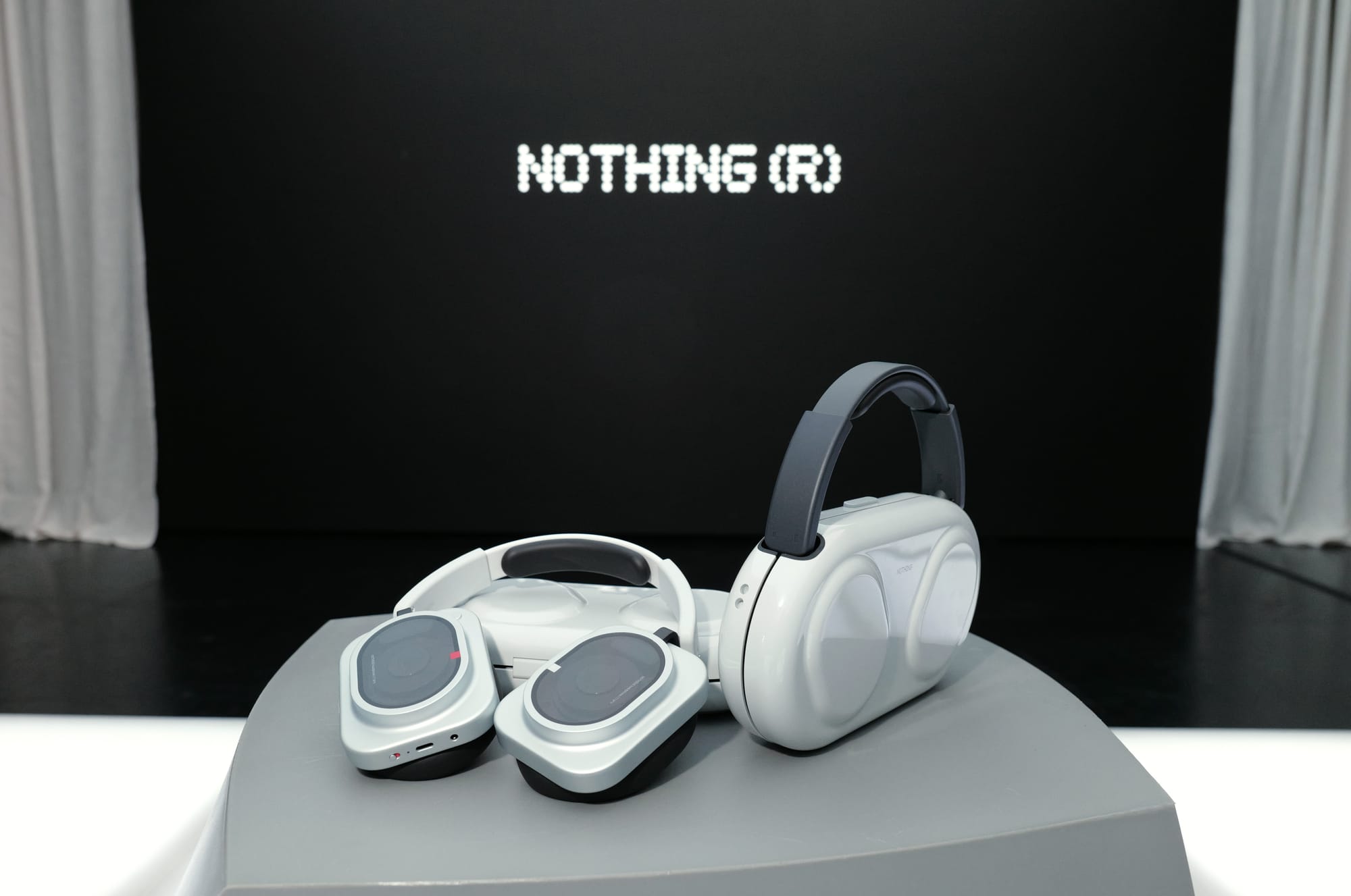
Nothing (R), a London headquartered consumer electronics firm known for its smartphones, audio products, and (*gulp*) AI tools, had taken over HERO as the setting for an invite-only event dubbed New Noise. It began as an official launch for the Headphone (1) Pro, its latest and undoubtedly greatest addition to its line of wearables. But as the evening went on, it would evolve into something else.
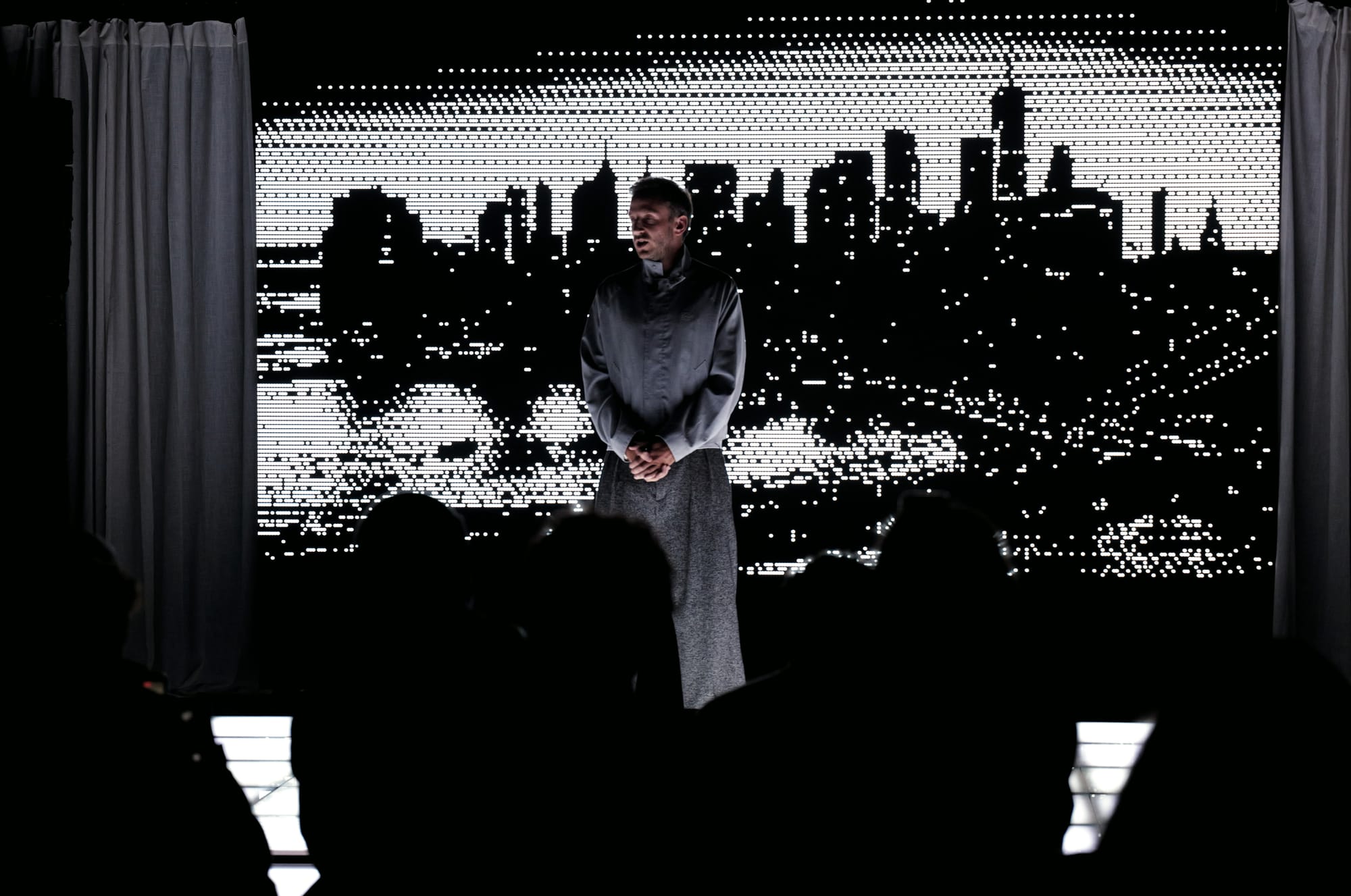
Dressed for the occasion like a much younger, sartorially savvy variant of Blade Runner's Dr. Eldon Tyrell, Chief Brand Officer Charlie Smith hailed the Headphone (1) Pro's triple driver architecture while standing against a monochromatic stage design and a polished series of backing visuals. "I personally like to describe them as ludicrously over-engineered," he explained to the journos, influencers, and content creators seated silently on benches in front of him, "because they give you this studio-level sound at incredible value [$399] in a design that feels as much like a fashion statement as a piece of tech."
[Full disclosure: I received a complimentary pair as a parting party favor and spent the next several days blissfully swaddled in their noise cancellation blaring Big Moochie Grape's new album, among others.]
These and other dutifully dictated talking points threatened to set a semi-scripted tone for these proceedings, though that corporatized rigidity began to thaw as a Q&A between Smith and Lead Industrial Designer Philipp Von Lintel led to more organic responses to structured inquiries. Amid bullet-pointed mentions of "the studio everywhere" as one of the Headphone (1) Pro's intentions, their one-on-one chat notably introduced a phrase that would reemerge later on in the program: rebellious creativity.
Indeed, the vibe shifted considerably in the direction of said compound expression once Kelela Mizanekristos and Sage "Navy Blue" Elsesser joined Von Lintel onstage for a subsequent panel discussion overseen by Nothing's Global Head of Communications Shavone Charles, who broadly complimented attendees on their fits before getting down to business.
What followed next was the closest any of us in this business of music get to an artists' salon anymore. That it happened at a tech concern's press conference felt, occasionally, like a bug more than a feature, I'll admit. But once the conversation got going, it actually achieved its aims of drawing spontaneous, unprotected remarks.
Elsesser was the first to really crack the event's polished exterior after being startled by a nearby teleprompter’s convenient biographical notes, served to him after Charles' introductory tip-off. "Excuse me, I didn't know I was gonna have stuff on here," he said. "I'm just gonna go with what I got in my heart."
He then improvised his way through a brief, mumbly self-assessment that conspicuously leaves out his involvement in the hip-horological cabal Very Special, one of the attributes that, outside of rap music, professional skateboarding, and breathtaking handsomeness, gives Elsesser a Most Interesting Man In The World aura. (We were all sat too far away to do a proper wrist check, anyway.)
On the other hand, Mizanekristos, who goes mononymously by her first name on releases like this summer's New Avatar for Warp Records, summed herself up as one who "works at the intersection of R&B and experimental dance music." Kelela understood the assignment, as did Von Lintel, who counts a period at Ableton as part of his credentials.
As a veteran albeit perpetually self conscious interviewer, I experienced twinges of empathy as Charles courteously coaxed the musicians into expounding on their DAW origins as pro-creatives, the influences on their artistry, the importance of genre fluidity, and just, you know, the je ne sais quoi of it all. Elsesser, who has increasingly embedded himself as a self-producer alongside his studio familiars like Child Actor and The Alchemist, reminisced about the Akai XR20 drum machine his father bought for him years earlier, its tactile charms engendering his current MPC affinity. "I'm grateful for technology, that I can return to an old hard drive and feel like I've stumbled upon a time capsule of old beats."
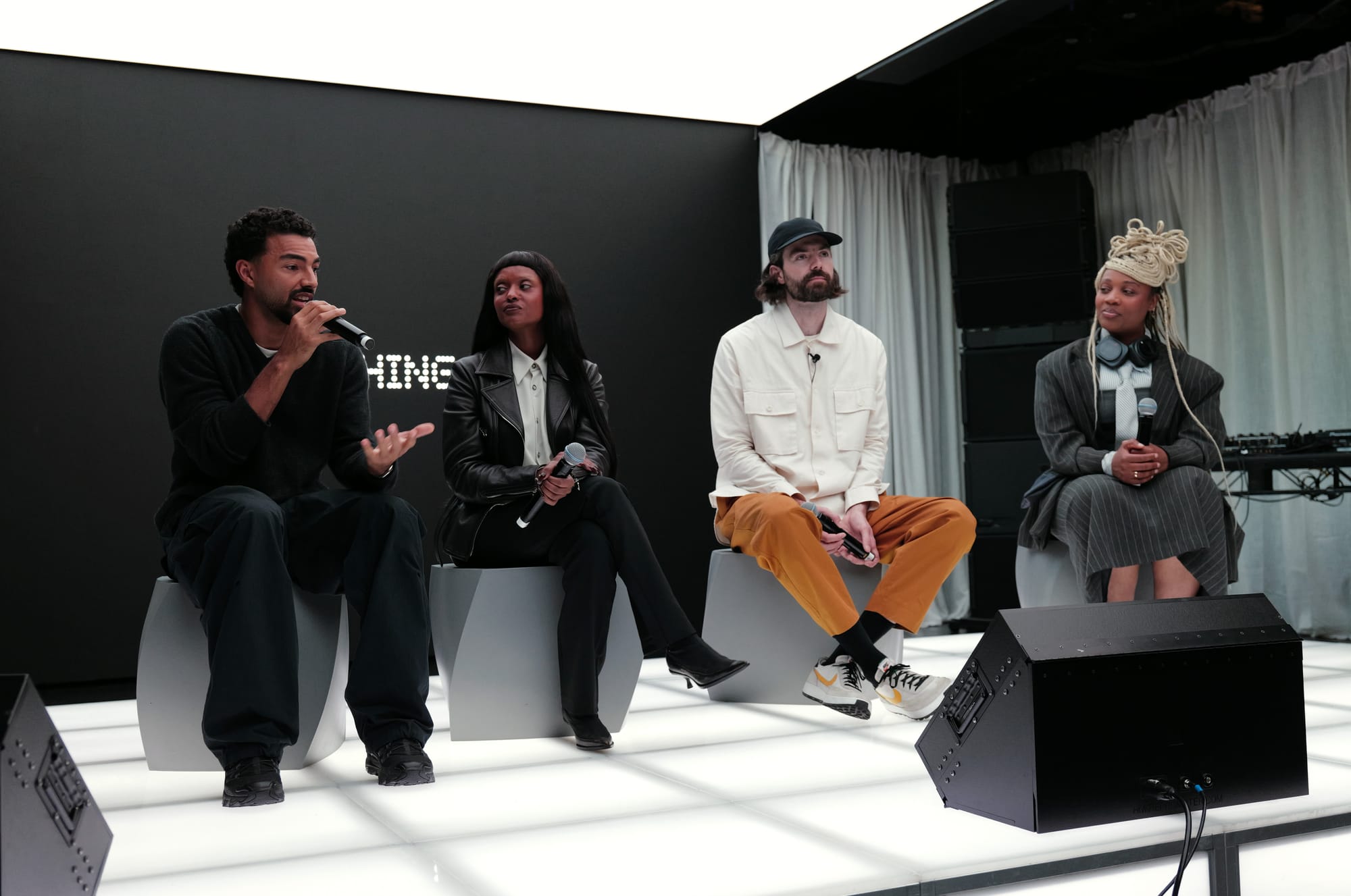
But before long, the gear talk, which one might reasonably expect at an event touting a piece of gear, turned introspective, which one might reasonably expect at an event with the likes of Kelela and Navy Blue. The latter was the first to use the word vulnerable in a reflective reply to one of Charles' prompts. "In the landscape of rap music right now, the intentionality of my music and the consciousness, I tend to feel quite isolated," he said. "I feel like I'm cutting a piece of my heart and placing it for the listener to have. I'm being vulnerable, but I don't think I'm, like, susceptible."
"In R&B, there's sort of an expectation of vulnerability," Kelela said. "In hip-hop it used to be way more even-Steven, and now it doesn't feel like people are living with their heart on their sleeve." Hell, even Von Lintel, who largely relinquished his mic to the other two's musings, couldn't help but relate. "In the design process, we have the same thing," he said. "You're giving something from yourself, but then at the same time you're doing it for a product, for a company."
A musician herself, Charles' queries repeatedly resurfaced that thematic button of rebellious creativity. "For us at Nothing (R), [it] means supporting the risk takers and innovators transforming the genre in categories of expression," she said at one point, later bringing it back in the final round to extract the artists' views on what clearly was a pre-approved, on-brand idiom.
Elsesser, circling back to his preceding thoughts on vulnerability, responded in a characteristically personal manner. "I feels kind of wrong to be, in my case, praised for telling the truth, about my life and struggle that I have [and] mental health issues," he said. "I just want to show up in the world how I would want to be shown up for."
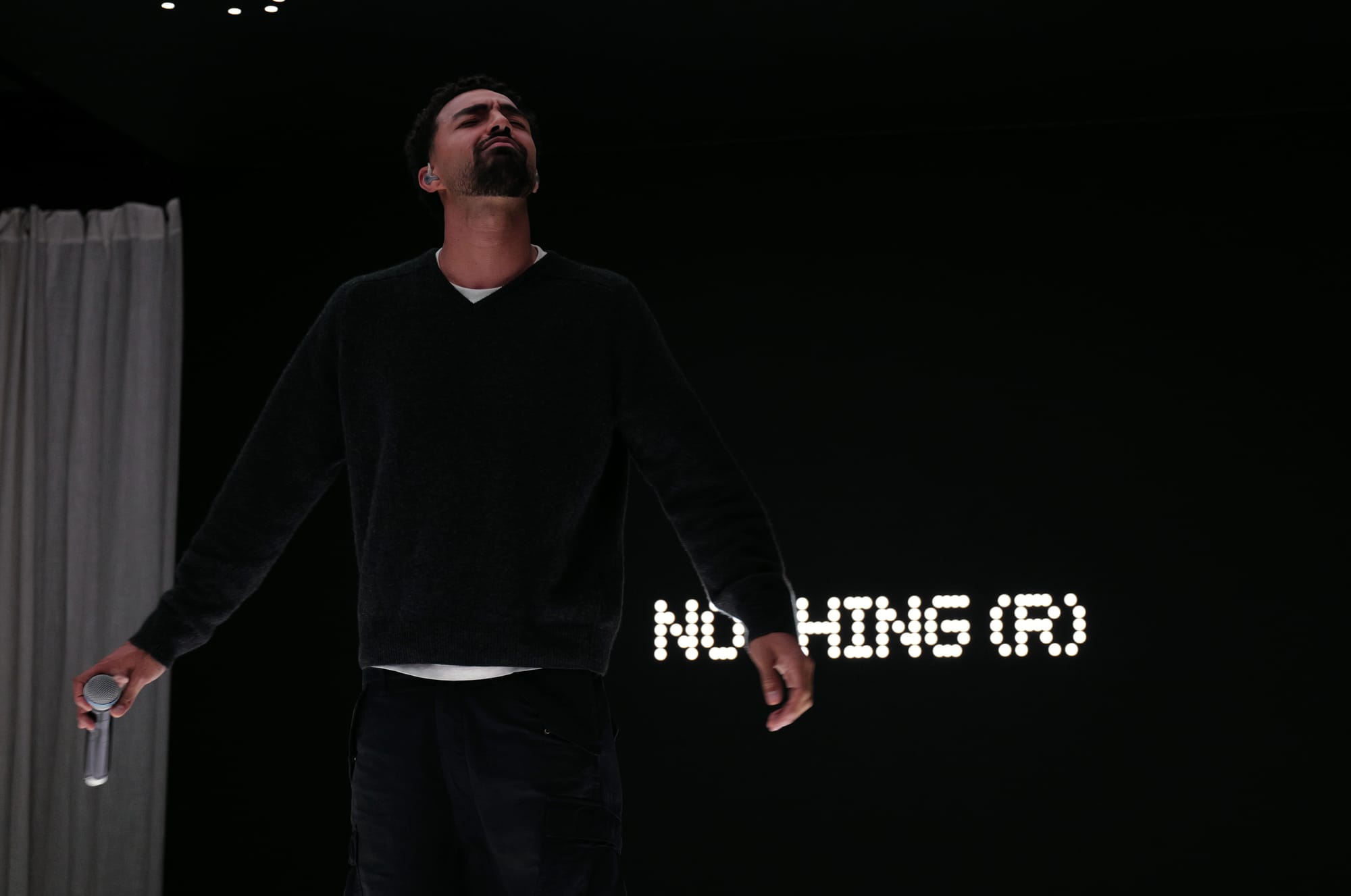
This notion manifested quite beautifully at the next portion of the Nothing (R) agenda, his mini-concert as Navy Blue. And this is the point where I confess to having previously never seen him play live.
Those who frequent cerebral, sensitive rap shows in New York City in recent years may have spotted me in the crowd at some stage or another. But what Elsesser does on his albums doesn't feel like an experience you want to share in a clubby ballroom or festival scrum. This stuff is just too fucking intimate to have to hear it while someone nearby is checking their Instagram DMs, chattering loudly and obliviously to a pal, or accidentally spilling their draft beer on the back of your jeans. I'd rather stay home.
As it turned out, the optimal setting to hear Navy Blue live is in a clinically sterile subterranean art space with architecturally unaccommodating seating like that of a gallery that doesn’t want you to linger. A damn good sound system like HERO's certainly doesn't hurt either. As he ran through a half dozen or so songs from albums like Memoirs In Armour and Sir Render, the audience sat still. You can talk about radical creativity all you want, but what I witnessed from the coterie around me was more of a radical politeness. Even more polite were the departures, high heels clacking on the scuffed black floor.
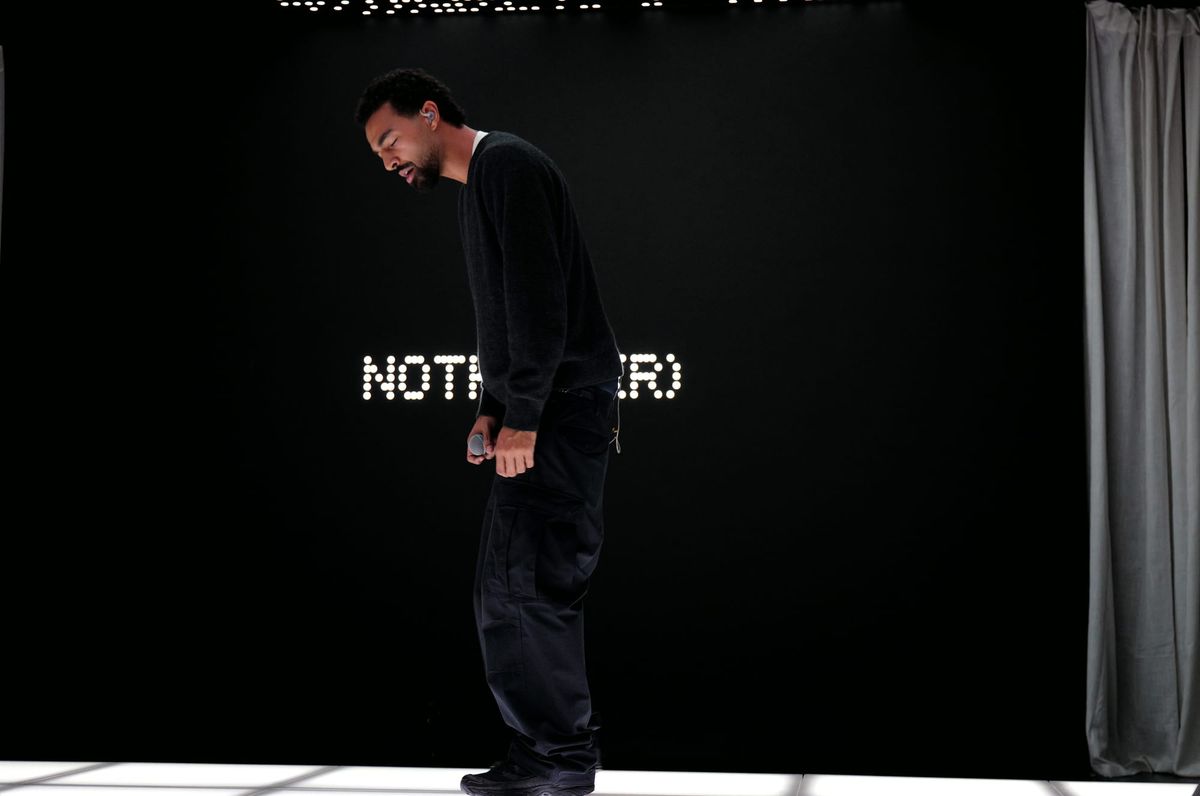
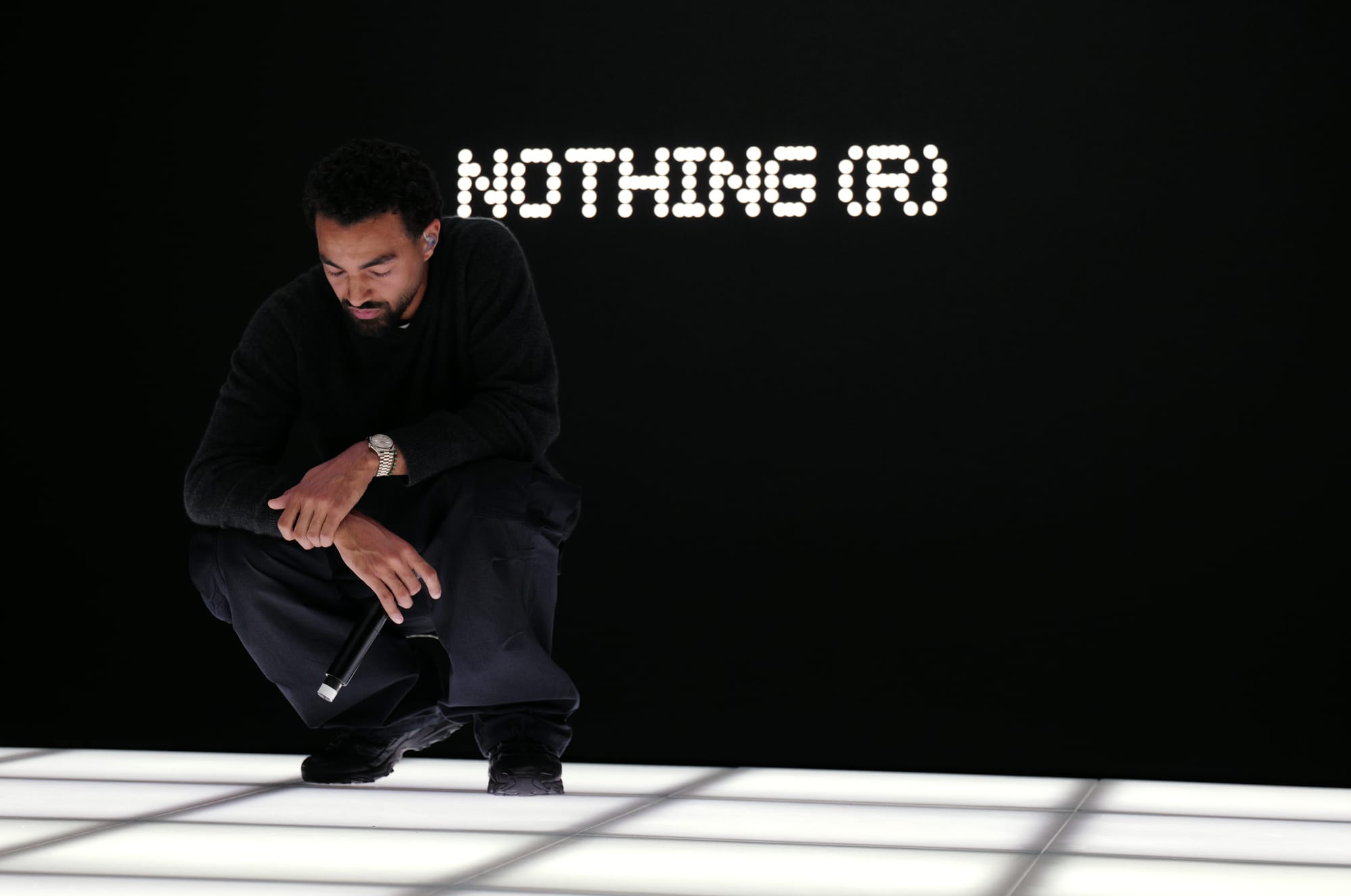
What made Elsesser's poetic performance up front so impactful was how non-performative it felt. He micro-paced the stage in sub-sections, like a Rockafeller skank slowed to a ruminative shuffle. During "Bleeding Scarlet," he visibly broke down during its staccato mantras, his voice cracking and creeping towards a whisper, crouching down as if compelled by force. My life, my story / My plight, my glory / My knife, my blood / My fight for my love. Even while he's going through it, he ain't doing it for us.
“I think I got one more and then I’m outta here,” he muttered, before finishing off with the hopeful refrain of "La Noche": I hope you find peace of mind on your own.
Immediately afterwards, in the HERO speakeasy type beat bar, the passed apps were beautiful but baffling, a unsatisfying textural sameness lurking behind their precious presentation on silver-ish platters. Being there was a surreal pivot after the vulnerability of Elsesser's deeply revealing show, but everyone else seemed altogether comfortable with, if not relieved by, the tangible vibe shift.
As the night descended into deep house and red wine, two great tastes that taste great together, I mingled trepidatiously with familiar journos, PR peeps, and courteous companymen. The influencers, however, these well groomed and aesthetically attractive aliens, scared the living shit out of me. They struck poses with the headphones at designated stations, making unnatural but social media normalized gestures and facial quirks. When my turn came to test drive the Headphone (1) Pro–by playing a Navy Blue track, of course–I took a few unsmiling selfies just to fit in, less embarrassed than I ought to have been as one of the visibly oldest folks present.
This, admittedly, is a side of the music industry I have never, ever been comfortable in, but it retains enough identifiable hallmarks of the myriad listening parties and album release fetes I've found myself in over my many years as a working music critic. I perched at the farthest end of the bar, not entirely anti-social but not exactly a welcoming presence to strangers. A black-clad barback apologetically gestured for me to move from my stool so he can replace a rack of glassware. I obliged, of course.
Over the speakers, Everything But The Girl's "Five Fathoms" seeped into the mix. A plurality of the invitees were not so much as conceived when this sumptuous opener from Ben Watt and Tracey Thorn's under-admired after-hours showpiece Temperamental. But it meant a shit ton to me when I first heard it at Tower Records on Newbury Street in Boston way back in 1999, maybe more than when my radio picked up Todd Terry's "Missing" remix as a NYC high schooler. Circling the proverbial drain of my mid-to-late 40s, its insistent groove and that heaven-sent vocal induced warming waves of nostalgia for my college years and then colder ones conjuring up long unrealized dreams.
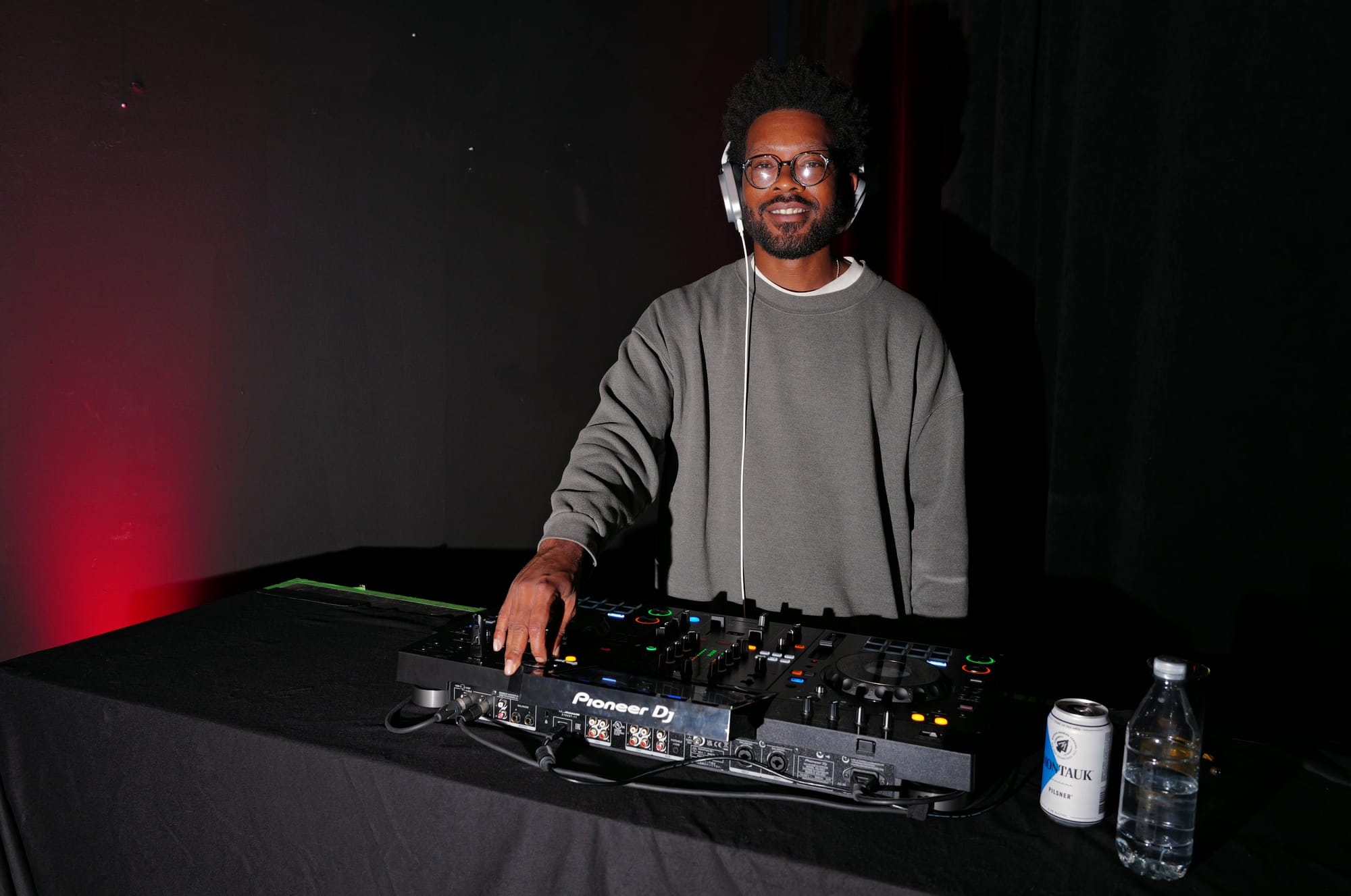
I approached the DJ–Ahwlee of B. Cool-Aid, to my quiet delight–who slowly, grudgingly, eventually acknowledged my presence at his austere tabletop corner setup with a palpable distaste, or perhaps a hesitant dread, for whatever potential song request I might foist upon him in this setting. So when I simply thanked the man for taking me back, he smiled wide and served up a fist bump of respect. Kindness can be pretty radical too.