Shabazz Palaces And The Re-Re-Rebirth Of Slick
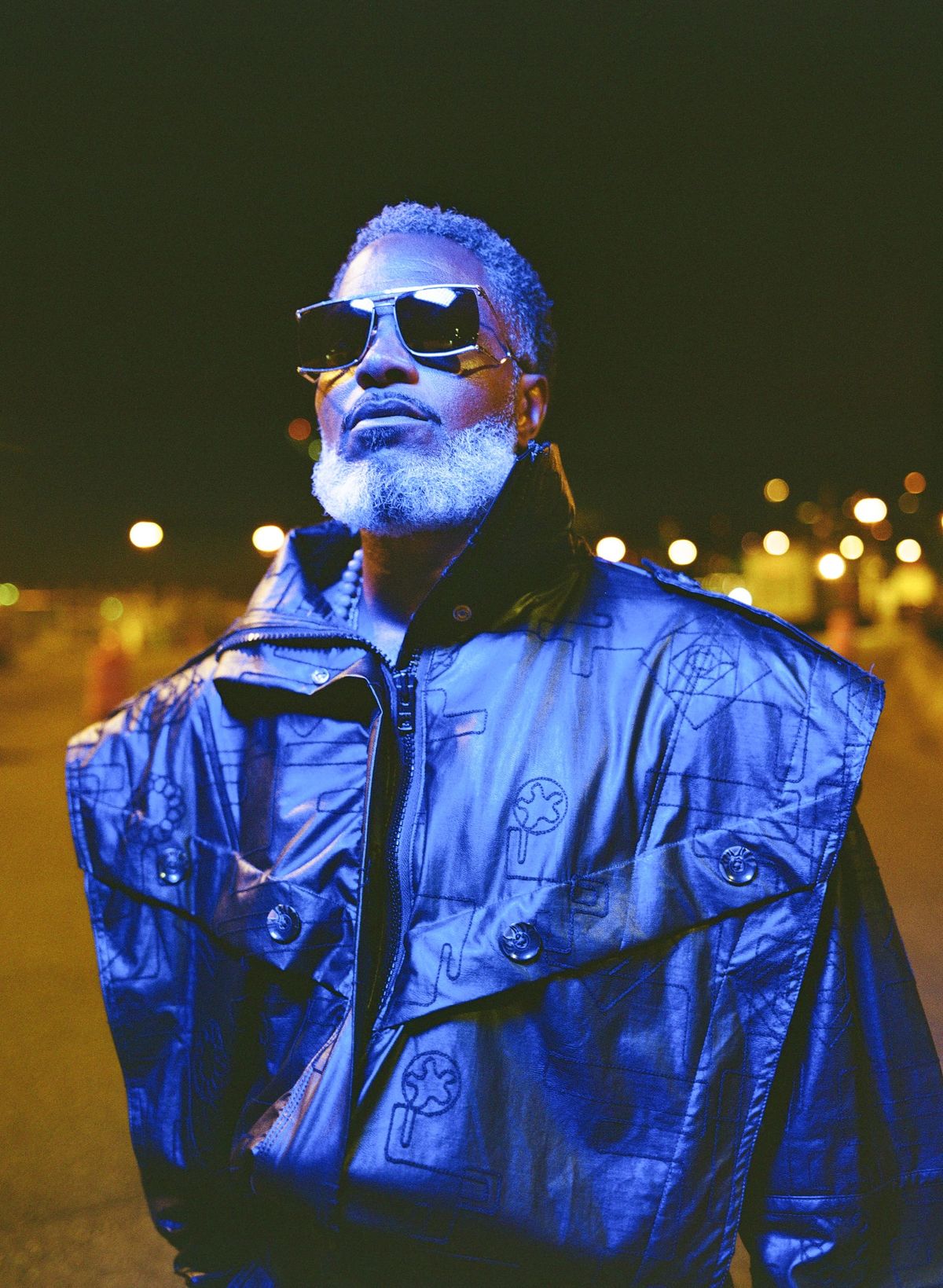
Ishmael Butler discusses the collaborative dynamics behind 'It's A Style Sport.' +reviews of GDP; Mutant Academy
"There are no second acts in American lives."
-F. Scott Fitzgerald, "The Last Tycoon" [1941]
"I twirl and cool and peel the rearview 'cause they are arresting, but wear jumpsuit and Chinese slippers–I'm still impressive."
-Shabazz Palaces, "Are You... Can You... Were You? (Felt)" [2011]
Hip-hop never fully recovered from Shabazz Palaces' Black Up.
In the decade-and-a-half that followed, few rap albums, if any, came close to matching what Ishmael Butler accomplished–musically, thematically, mystically, all that–on his seismic 2011 Sub Pop LP debut. Rappers and beatmakers who fancy themselves avant-garde heads are still trying to catch up with his interplanetary, Afrocentric, self-produced, downright dope document. Music critics not just at the time but, judging by its placement on Pitchfork's The 100 Best Rap Albums of All Time ranking, remain in particular awe of its evident oblique strategies–remixed crossed out, and mashed up–to this day.
"I feel like creativity in the hip-hop game is stagnant," Butler says, "but I don't think it's a negative thing, just an observation. It's the new way where commerciality and materiality override artistic invention."
That he achieved this creative feat nearly twenty years after he entered the Billboard charts as part of Digable Planets with the singular Reachin' (A New Refutation of Time and Space) and its equally out-of-the-ordinary hit "Rebirth of Slick (Cool Like Dat)" is especially magical. (And when I say this, best believe I'm invoking The Pledge, The Turn, and The Prestige here.)
That he has continued pushing his vision further and further out into the genre cosmos with another seven–now, with the just-released It's A Style Sport for Sub Pop, eight–Shabazz Palaces records is pure wizardry, the kind F. Scott Fitzgerald couldn't have fathomed in his 1920s prime any more than can the scores of Golden Age hip-hop hitmaker peers Butler has outlasted.
"What you need to be able to do today isn't what you needed to be able to do back then–and it shouldn't be," he says with a wisdom befitting his image. "Me coming from that period of time, making my bones and understanding who I am in that period of time, that philosophy is ingrained in the way that I look at things."
Nowadays, Butler shrewdly balances his time between Digable Planets and Shabazz Palaces, reuniting with Mariana "Ladybug Mecca" Vieira and Craig "Doodlebug" Irving for world tours that honors the group's legacy while actively creating new musical works under his proprietary moniker. Of particular interest, however, is that the two entities share more than himself in common, with several members of Digable's backing band playing on It's A Style Sport as well.
It is, perhaps, the most evidently collaborative Shabazz Palaces album since Tendai Maraire's departure from the project ahead of 2020's The Don Of Diamond Dreams. "He wasn't in the sessions like these guys were in these sessions," Butler says of his former associate. By contrast, current players like guitarist Thaddeus "Thaddillac" Turner, bassist Evan Flory-Barnes, and keyboardist Darrius Willrich feature prominently on It's A Style Sport, supporting Butler's wider aims while contributing to his unique sonic lexicon.
When they come together as a unit, as on tracks like "Show Me Missouri In Mink" and the delightful "Deadstock Dude," there's a fullness to the funk, a jazzy self-restraint, a riveting push-and-pull. "I'm sort of the leader, in the sense that I have conceptually mapped out what I'm trying to hear and see in my mind," he says, comparing their experience in studio together to that of coaching a team. "I'm also doing it with those guys in mind, their capabilities and tastes and styles."
Butler describes the band's musical connection and communication both on It's A Style Sport and live on stage as telepathic. "I could go to them and be like, nah, that's too orange. I'm thinking purple, I'm thinking blue," he says. Yet their dynamic depends on a rigorous commitment to practice, another divergence from his earlier work with Maraire. "The way I ran that show would be the tracks were what they were and his playing could be on an accoutrement to that. In the new band, there's hits and changes, so we have to actually rehearse quite a bit."
Even as Shabazz Palaces has evolved through its 2020s stages, another constant presence has helped keep Butler on course: Erik Blood. Though he no longer stays in the Seattle area where Butler resides, his tenure as the project's co-producer, engineer, and mixer goes all the way back to the EPs that preceded Black Up, a testament to their working relationship as well as their friendship.
"I'll be doing something and he'll be like, nah, nah, nah, that's not a good direction," he says of his past Knife Knights cohort. "He's saying it stylistically, taste-wise, but he's also understanding that me, as his bro, can get to a place within myself that he knows that I can get to. He is letting me know not to waste no time."
Again, Butler's affinity for sports resurfaces as he ruminates on the value Blood brings to Shabazz Palaces. "One of my critiques of modern sports coverage is that they always focus on the guy that made the shot, the guy that made the touchdown, but there's so many other people involved in whatever success is had on the court or on the field," he says. "That's an under-covered thing for those that are really interested in shit like that."
Another key figure on the roster these days is acclaimed jazz drummer Kassa Overall, who guests on no fewer than five It's A Style Sport songs, including the single "Ahh World (I Won The Alpha Bet)." "Anytime he's around, I feel like magic has a good possibility of happening," he says of Overall, who inventively covered "Rebirth of Slick" as an instrumental on last year's CREAM album. "I rarely say to him, do this or do that. I'm calling on him to do him, because I know his wide variety of influences and knowledge, and the situations that he's been in."
Looking back on Black Up 15 years later, Butler reflects on how life-changing and life-affirming it turned out. "After Digable, I thought my career was over because I had aged out," he says, coming from an era before home studios and streaming platforms revolutionized the industry. "I realized at that time that I was making music for a real reason, that I was compelled to do it, and I was proud about that."
Still, having initially achieved success within the major label system, it was a struggle for him to adapt to these new systems and their new rules. "It was a pivotal point in my life," he says. "I wasn't really earning a lot of money, and situations in life was not making me feel positive about myself or about my prospects." He self-released two Shabazz Palaces EPs in Seattle record stores while maintaining a semi-enigmatic identity distinct from his days as "Butterfly," never dreaming that an indie like Sub Pop would even be interested in what he was into. "They kind of saved my musical mental health with that opportunity, and it put me on a trajectory that was coming up out of the well that I was in."
Making Black Up and the opportunity of releasing it through that storied record label put the proverbial battery in Butler's back. He describes the surrounding pressure as the impetus to work even harder, an ethos that continues to guide his work as Shabazz Palaces. "From then till now, it's allowed me to have freedom, autonomy, opportunity and belief from business partners, from promoters, from all the things that allow me to be able to live my dream," he says. "Knowing what I know now, it'd be tough to see myself anywhere else."

GDP, Cross Off Matthew
Despite being an outlier on Run For Cover Records' predominantly hardcore and pop punk roster, New Jersey's GDP became a cult favorite of sorts. The hip-hop sensibilities at the heart of Useless Eaters and Holla drew in those who identified with his particular brand of bars, allowing him to break through the genre resistance listeners might otherwise have exhibited. On Cross Off Matthew, his first solo effort after a lengthy period away from rap, he returns as a revitalized, demonstrably more sapient lyricist. Those who connected with his words a decade or so earlier will find him as engaging as ever amid the fizzling feedback of “Island In The Sky” and the boom bap turbulence of “Undone” with Fatboi Sharif. (The pair previously joined forces for last year's joint project Endocrine.) Whether he’s reflecting on mental health for “Seroquel” or rattling off memories for “Bipped,” his self-produced cuts teeter between individuality and insularity through probing passages and cleverly constructed references.
Mutant Academy, We'll Swap It Out, Vol. 2
While Fly Anakin is still the most visible member Mutant Academy, the rest of the Richmond, Virginia hip-hop collective defies the industry norm by actually being a hugely talented lot. On this second volume of the crew's We'll Swap It Out series, a cadre of emcees and beatmakers step up to prove that 2024's Keep Holly Alive wasn't a fluke. Core member Foisey handles the bulk of the production here, backing up an exceptional suave Henny L.O. on "Walk With Me" and an animated Anakin on the shimmering "Reynolds Wrap." But the most egregious scene stealer here tends to be Big Kahuna OG, who follows his grimy solo moment "Kahuna Corporation" with penetrative verses on "Don't Ask" and "Make It Last." The standout in the pack comes via posse cuts "Big Stupid" and "Kush Up," both full-throated demonstrations of their combined might.


Three new tracks to snack on...
Meyhem Lauren, "Radikon"
AJ Suede, "Billed Gates"
Estee Nack & al.divino, "TYB X BUSHIDO"