Donwill & The Lost Art Of The Hip-Hop Interview
The Tanya Morgan member discusses his role as host and interviewer for The Almanac Of Rap podcast.
The hip-hop media ecosystem is in shambles. Outlets that once covered the genre with integrity, or at least an air of authenticity, have been decimated by venture capital vultures and ceaseless rounds of layoffs. As the culture (via the companies that profit off it) actively cedes power to clout-chasing influencers, overtly toxic personalities, and royalty-starved rappers, journalists find themselves facing obsolescence while pondering pivots–to video, newsletters, or other careers entirely.
This new world(star) order got recent validation in one of the most ironically sad ways when Complex published its annual "Hip-Hop Media Power Ranking." The once formidable publication, now reduced to a shell of itself after labor cuts and mission-shifting intellectual property fire sales, humbled itself in a virtual cuck chair by ranking the current top 35 power players in the arena it once held sway within.
Despite the presence of respected journos and critics Alphonse Pierre and Elliott Wilson in its lower rung, the remainder of the list was largely comprised of podcasters and content creators. It's easy to romanticize the old days of the music press, to whitewash over its payola schemes, major label favoritism, and hagiographic supplication. But such ease only grows when folks like Akademiks (No. 4) and DJ Vlad (No. 10) drive the discourse, not to mention the growing scrum of dubious YouTube and social video clones filling the online echo chamber.
That said, there are exceptions out there, people genuinely invested in the culture with an ongoing interest in the consumption and dissemination of institutional knowledge to the hip-hop masses. Rarer still are those in said category with sizable platforms or otherwise backed by legacy brands who can finance their work. Within that rather small subset is where you'll find Donwill, host of Okayplayer's The Almanac Of Rap.
"There've been several different versions of the staff there, but the heart and song of Okayplayer is still a community of people who really love music and who really love things about music," he says of the company whose message boards he once frequented in search of online community. "To go into this iteration of the office and see a timeline of Okayplayer's history with my face up there, it's just wild."
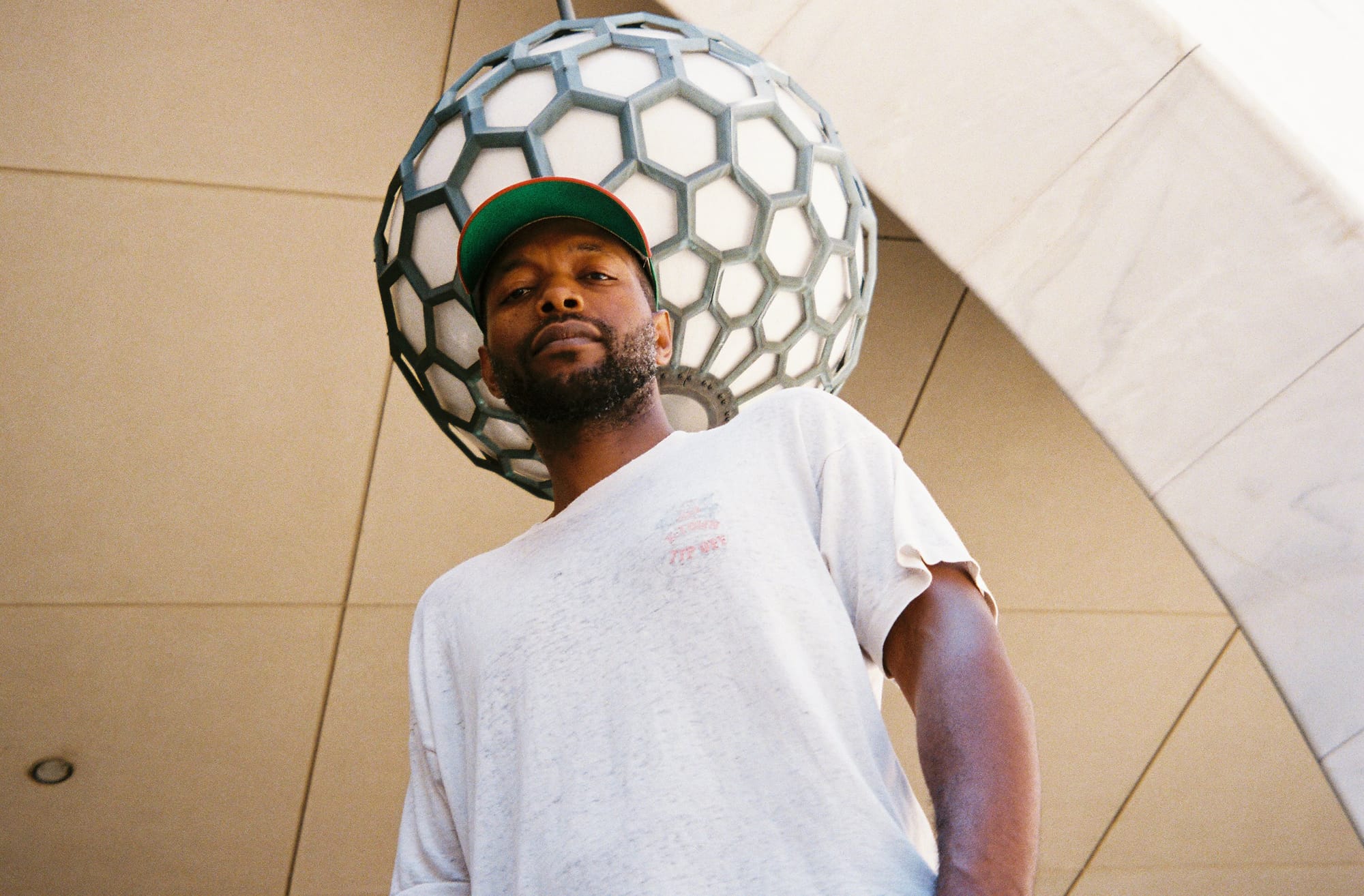
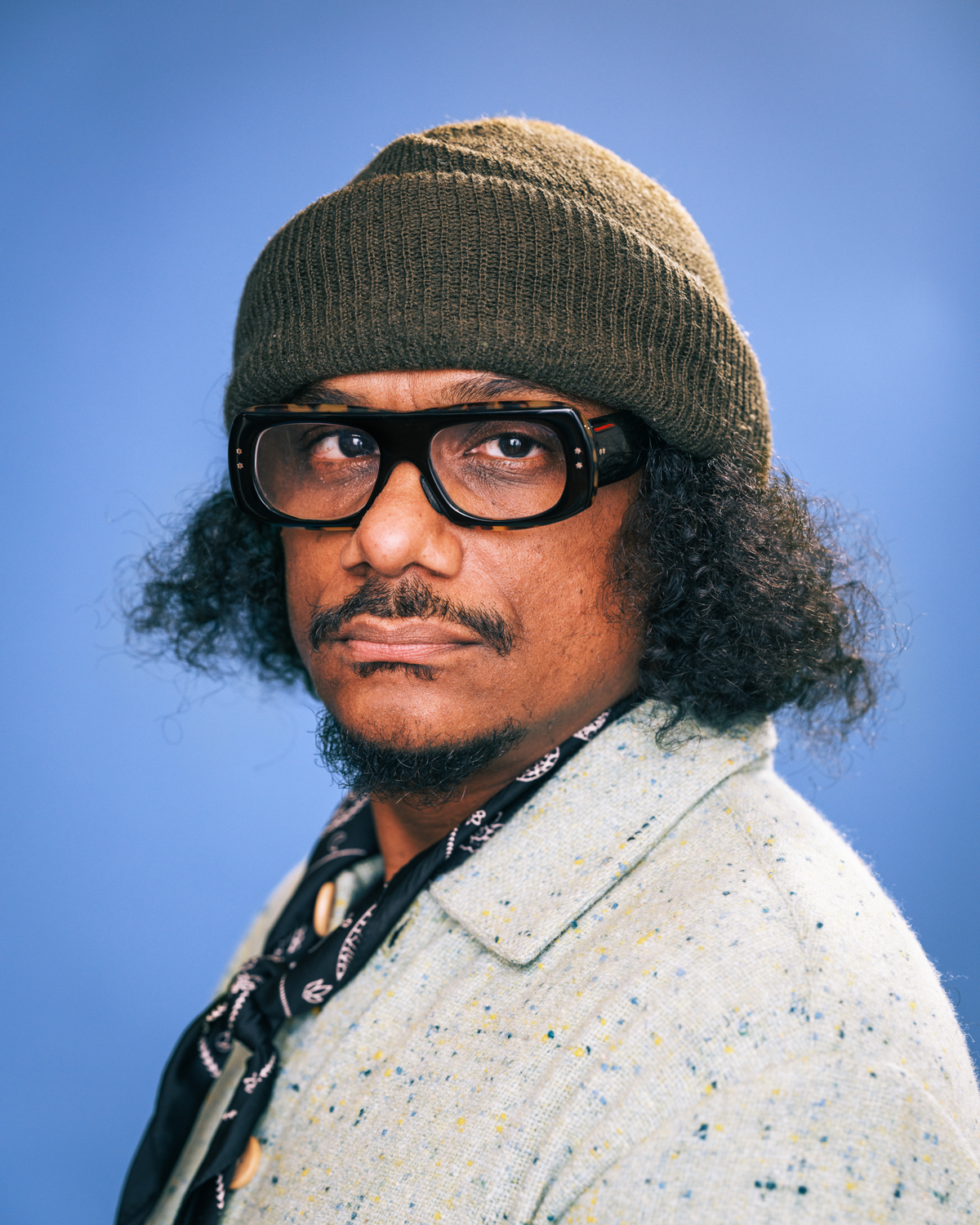
Known to indie hip-hop heads as a founding member of "Brooklynati"-based rap act Tanya Morgan, and to stand-up comedy devotees as Michelle Buteau's touring DJ, the rapper-turned-podcaster is on Season Four of his interview-centric, two-time Webby Award-winning show. His picnic table-set conversational subjects this time around include legends and luminaries like Bun B, Havoc of Mobb Deep, and Raekwon, as well as respected genre figures like Queens rapper Grafh and Seattle-bred producer Jake One. (In previous seasons, he sat down with everyone from MC Lyte to Homeboy Sandman to Rapsody.)
"There are some guests who are willing to play along, or somebody might just be having a day where they just fucking don't feel like it," Donwill says of these encounters in this particular phase of his public life. "The way that I've handled that is by trying to make sure I'm researched so that, if nothing else, I can fall back on knowing about who the person is I'm talking to and putting them at ease."
Formerly audio-only, The Almanac Of Rap moving to Okayplayer opened up the show's video prospects. What has it been like for you being an on-camera personality?
Donwill: If I'm being fully transparent, it's a little difficult. To know me is to know that I don't post on Instagram; I don't post pictures of myself really like that. It's not about being anonymous. It's more so about understanding the power of image, the power of a photograph, and taking so many press photos and photos during the heyday of Tanya Morgan. There's a shirt that I really love that I bought for a photo shoot, and those photos were used for two years solid. They still pop up and I'm just like, I can't wear this shirt because now it's... So that sort of thing. There are just days where you're going to throw on some shit and go outside or whatever, whatever. And this might just be a me thing, but when you're filming a podcast, when you're committed to presenting a version of yourself to an audience, I care about what I look like. I want to make sure that my outfit's on point.
I enjoy the audio side of things because nobody's looking at you, they're listening to you. But with video, I'm a little more self-conscious. I think that everybody has an internal monologue when it comes to taking pictures and being photographed. It activates a different layer of anxiety. But it's been a learning process and I'm more comfortable with it now than I was initially.
The thing I love about audio is you can really edit what's happening. It's easier to remove chunks of a thing and swap stuff and do things to it–not necessarily to be deceptive, but to present a thing in a way that you intend for it to be heard. Whereas [with] a video interview, you're getting just whatever was said.
Approaching this current season, with a lot of great hip-hop vets in the mix as your guests, how important was it for you to be filling in the gaps for a younger generation that didn't grow up with the magazines and the media outlets and the lore that we had access to?
Something that I've been dealing with in real time and learning is that the stuff that I know I took for granted for a long time is lived experience. There's so many times where I'll be thinking about an artist or doing research and want to look up something, I'm like, oh, that doesn't exist unless you had a magazine or a VHS of it. So filling in those blanks, it's a big part of the show and a big part of why I do the show. Even just having a summary of a person's career, to the point where if another person's looking them up, they can watch the show and be like, okay, this hits the major beats of what this person has been through. Especially with artists like Bun B or Havoc, people who I wouldn't necessarily have had access to when I was just making it in my bedroom.
When you're sitting with them, you want to get it right. But you also want to maintain the core value of the show, which for me was about whimsy. It was about not necessarily flat out being silly, but about the ephemeral moments. The metaphor that I use is, if I'm looking at a picture of the artist, I want to know what was outside the frame. I want to know what was on the other side of the camera.
Raekwon is a good example. Growing up in Staten Island and coming to the city, you had to take a boat. In my mind, taking a boat is a big deal and y'all just did it every day as a part of coming to hang out. How did that shape you as an adult? Were you more apt to travel? I wish I could have talked to him longer about it. He went on a five or 10 minute story about how they would just have the ferry. It would be a fucking party and it would be like 20 dudes. And even before that, you had to really coordinate getting home before the streetlights came on, because your mom don't give a fuck about you being on a boat. You know you got to be home. It made me think about those kind of stories, not even humanizing a person because we already look at them as human, but just filling in the color of some of those experiences. You think about Wu-Tang going to do a show at the Tunnel, but you also have to remember they took a ferry to the Tunnel.
Over these four seasons, how have you dealt with instances where guests are a bit more tight-lipped than you'd hoped? How did you try to extract answers or interesting information out of them?
I think that the way that I deal with it is always thinking about my experience as an artist in an interview. Whenever I was talking to somebody who was researched and informed and cared about the show they were making, in a way that was bigger than me, I always had a good time. And when it was somebody who just, for whatever reason, wasn't really as connected to what they were doing as an interviewer or as a host, [we] tended to have a rougher go, and I might've clammed up a little bit.
This is a learning process for me. I didn't go to school for journalism. I got into talking to people, conversation and interviewing, out of pure curiosity and interest. The thing that I'm learning how to do is, you've done the research, you wrote the questions, [but] sometimes the segues and the side conversations become the thing that really is more interesting than what you want to know.
I interviewed Chika. For full context, we had the interview booked for months out and her schedule kept getting changed around, so we had to move the date around. By the time we got to the interview, the questions were kind of old. I didn't really have the time to sit and refresh, but I had done enough research about her. I didn't know about what was happening with her currently, but when we sat down, I was like, you've done the homework, and now the person's there. If the questions aren't hitting, if the questions are a little dated, just lean into what you know or what you have found out. And within five or 10 minutes of the interview, we just were talking about her collecting ink pens. You could see her eyes light up. That made the conversation a lot easier when some of the questions that I had weren't hitting as hard. She kind of knew this guy cares about this conversation.
Conversely, there are some interviewees who tend to take over the conversation and make it harder to get your questions through. How do you fit yourself in when that happens?
I've had a couple interviews like that. The worst part is that it becomes more of a audiobook, where you're just listening to a person talk at length. You're not necessarily interjecting as a host and you're not really steering the conversation. When it's hard to get a word in edgewise, it makes it feel less like a conversation and more like a talking-to. The way that I've dealt with it is, if it's an audio episode, I have a thousand percent trimmed up a five-minute answer to be two minutes. Based on experience, a lot of times they make the same point two or three different ways with two or three different examples or wordings. Essentially, you just got to find the most succinct best answer to the question within that little chunk.
But if it's a situation like a video interview where you're sitting there trying to figure out how to wrangle this conversation in, I just start in real time, editing my questions and figuring out how to either get a more succinct answer or get an answer that encapsulates two or three other questions I want to ask. Sometimes they'll just naturally get to a question that I'm going to ask within the bigger answer. And within that, I also is try to overcompensate by putting a button on what they're saying. Sometimes we can be given some sort of extra in-depth context to whatever they're saying to make the host interviewer portion of it more substantial, but that's always tricky. I can say that some people are good at interviews and some people you can tell they're just not great at it for whatever reason, but that doesn't invalidate them as a talent.
You've got strong connections to and within the comedy community. I see your names show up like a DJ host for stand-up events throughout NYC. How has your experience around comics helped or informed you in this podcaster mode?