Cropping Up: megiapa
A Q&A with the International Anthem beatmaker. +reviews of Rockitneedspace; HairLine Brothers
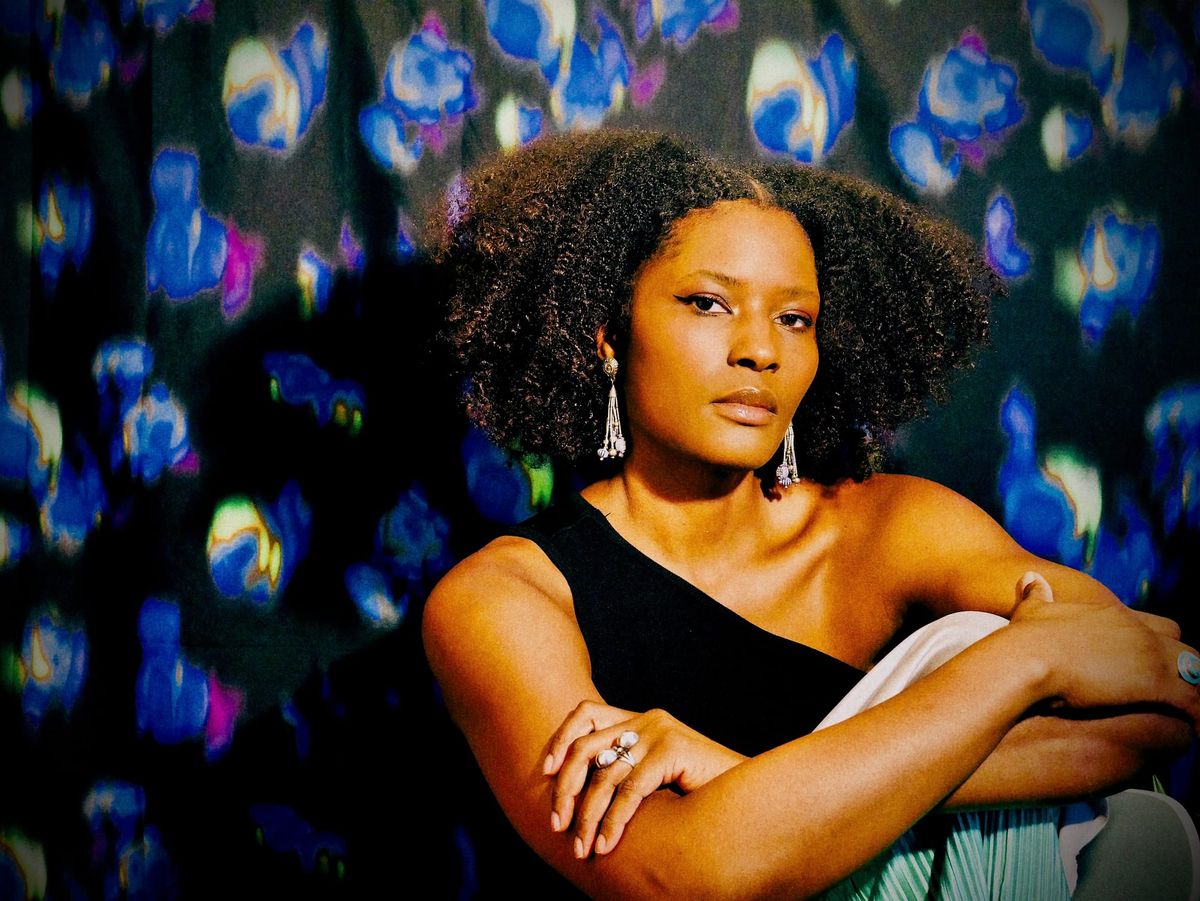

CROPPING UP is an interview series designed to introduce CABBAGES readers to talented hip-hop artists on the rise.
For this edition, I caught up with megiapa. The Los Angeles-based producer/beatmaker/vocalist recently released the album Intentions, her full-length debut for the International Anthem label.
How did you first become involved with International Anthem?
megiapa: I've known about them since they started, but my first interaction with them was being booked by King Hippo, Alejandro Ayala, to open for Makaya McCraven. It was a stack with Anthony Valadez DJing, Bottle Tree, and me opening that whole shindig. I really had to believe in myself that he had a vision for how he curated that night, and that was my first real touchpoint with them. I had just started using Ableton Live. I didn't have a SP-404; I didn't have anything really. I got all set up and everything. Right before I was supposed to go on, I had pressed some button or done something within Ableton, and I lost sound from everything. I guess by some stroke of luck, I figured out what it was. I also remember the feeling of the joy of hearing my bass so loud on a loud system. We were at the Empty Bottle and whatever nerves I had completely dissipated when I heard my music that big in that venue.
In terms of [Intentions] and how it came about,I had a goal to put music out on vinyl, and I've always loved International Anthem's slick ass vinyl. It looks so good, it's heavy, it feels great. It's a really beautiful and intentional presentation of the music. I was like, I would love if that were possible for my record. Let me talk to them. Let me see if they feel this. I also knew that my music is a mesh of hip-hop, R&B, and soul, and so it's not truly in line with what they'd been putting out, but I wanted to float it to them. It was a very easy conversation. I felt very supported in that, and I felt very heard by Scottie [McNiece, co-founder] about what my dream was for this music and how I wanted it to sound and who I wanted to collaborate with. At the end of 2025 we had some more serious conversations, and before I knew it, I was back in Chicago on my birthday week mixing the record in the studio, and I was like, whoa, this is crazy.
How did moving from Chicago to Los Angeles impact you artistically, either in the making of Intentions or otherwise?
It was very affirming. I was able, after some time, to move with more confidence around what I was doing. I didn't have to explain to anybody what my music was or where it was coming from. Being closer to some of the scene that inspired me–Low End Theory, Daedalus, Stones Throw–I was in a place where a lot of my music history had come from. I felt like I was where I was supposed to be at the time.
There's a collaborative spirit in Los Angeles. People are ready to work; they're always working. My artist friends and people on the scene are the hardest working and most passionate that I've ever met. It was very inspiring. I have a different background. I didn't study music; I don't have any formal training, but the people I'm around are such legends in their own right, so it's really inspiring to see how they work and how they really live and breathe music on a daily basis.
A number of these musicians appear on Intentions. Did their contributions alter the way you thought about these songs or even compel you to make changes to a song after the fact in response?
What I had done over the last 10 years of my life was just make music, electronically produce them, and release them. But in this process, I wanted to collaborate; I wanted live musicians in my music. I just didn't know exactly where to start with that, but as I played, people were like, oh yeah, I could add to that, or, this could sound cool. I'm fans of these people and now they want to play with me. That's insane.
We had only one session in person, and some of those keys that you hear on "Crashing Down" come from that, which I think is so cool. But the rest of it was online, sending stems back and forth. I was like, play over whatever you want and just send me back what you do. And once I received it back, it was like, you now have 20 bass takes over this. You have a bunch of keys that you can use. You have all these things. It was such a challenge for me to have to decide what I was going to use from all that magic and beauty, how I was going to make space for them in my own music, how I was going to pull back on my own stuff.
It was about me going through all those takes, arranging, figuring out which parts go where and what fit my vision. I felt understood, but there were some decisions that I had to make, and that was really hard. And there's still different decisions I would make. With all the stems that I had, I could make another record with just what everybody sent me.
Beyond the instrumental and production side of things, you have the vocal component. There are songs here like "Open Your Eyes" where that's very prominent, and then there are others that utilize voice more as a texture. How did you decide which tracks warranted vocals?
I think people see me often as a vocalist. I've always seen myself as a beatmaker first; I just happen to sing over my beats. So when I make music, I'm really thinking about, not what I'm going to say, but more what vibe can go over it. And so naturally my stuff is scaled back and the decision really is what am I going to sing on or make a song out of.
Something like "To Enjoy" is very easy for me to make, and it's the direction that I normally go in. I might add some sparse vocals I think would sound cool. With more sing-songy songs like "Can't Believe," "Open Your Eyes," or [The Blackbyrds cover] "Dreaming About You," the songs that have my voice more present, those were really more intentional thoughts. The decision is really always just what could go here from a producer/beatmaker perspective.
The other cover on Intentions is one by The New Rotary Connection, "Black Gold of the Sun." How has the psychedelic soul era influenced you as an artist?
I would say anything psychedelic, I'm into.There's a specific story about that song and why it appealed to me. I love the expansive sound of that track. I love how big it feels, the world that you feel you're inside of when you listen to that original track. I didn't know about that song for a long time until I met Stacy Epps, and I learned about it the day that I met her. Technically we have a mutual in Chicago, and so that's how we got connected. She ended up showing up on my doorstep one day, and we just hung out on the patio, ate food, and played music for each other. She played me the song and I was just like, what is this? Why have I never heard this? I became really enthralled in the story of it, having met her. She was like my sister after that initial meeting, and out of it came this beautiful song. I remember just playing it over and over and over.
I'd never made a cover really, and I sat down at my laptop one day and was like, what would it be like if I tried to make this song? There's so many aspects to it. I was like, well, I'm definitely putting some 808s in it. That's just what I do. But once I finished it, it really sounded very close to what it sounded like in the coming days that I made it.

Rockitneedspace & SURF GANG, Next Day Air
Earlier this year, Tan Cressida head honcho Earl Sweatshirt ratified his SURF GANG connection with his ponderous half of the double album POMPEII // UTILITY. Mere months later, that relationship expands with the release of Next Day Air, a label debut for Rockitneedspace. With psychotropic plugg production handled primarily by the SG collective's Harrison, the Los Angeles rapper keenly cruises off these auspicious twin cosigns with laidback ease, his lifestyle bars purposefully beclouded by cannabinoids on "factory reset" and "iN LOVING COLOUR." Even through the ever-present haze of bass and bleep, you can hear a foundational appreciation of West Coast hip-hop formalism via tracks like "ZOUTHBAYLAKERZ" and the furtively muttered "skeptix." TC labelmate Cletus Strap and the aforementioned Earl share lissome verses for the propulsive single "Mr. Doubt," while Rockit's repeat collaborator Anklesandwich brings a similarly likeminded sensibility to the fractured, whirling "reloaded."
HairLine Brothers, Hairitage
As abstract as hip-hop can get in 2026, there's something to be said for those contemporary few who display boom bap craftsmanship without getting mired in the limits of traditionalism. You can count Massachusetts denizens North$ide Dro and The Supervisor among that increasingly uncommon class of artists, judging by their joint efforts as HairLine Brothers. Here to remind lazy listeners that the Boston area isn't solely the domain of collegiate types, their Hairitage project benefits from lived experiences and rhymesayin' research. The duo trade off with the familiarity of old pros on head-nod heatseekers "Cages" and "Gastro," as well as the decidedly groovier "BOOM SHAKALAKA." A Cambridge native himself, K-The-I??? executes a boisterous, classically complex guest verse on album standout "Everywhere," with the Brothers backing him up with suitably energetic expressions of their own.

Three new tracks to snack on...
Che Noir, "Grandma's Cookies"
Mike Ladd, "Time Has"
Volume 10, "Psych Meds (Th' Mole x Cee One Remix)"