Black Don't Crack. Neither Does Curly Castro.
The ShrapKnel emcee discusses his new cinema-n-comics-inspired solo album 'Yaphet' for Backwoodz Studioz.
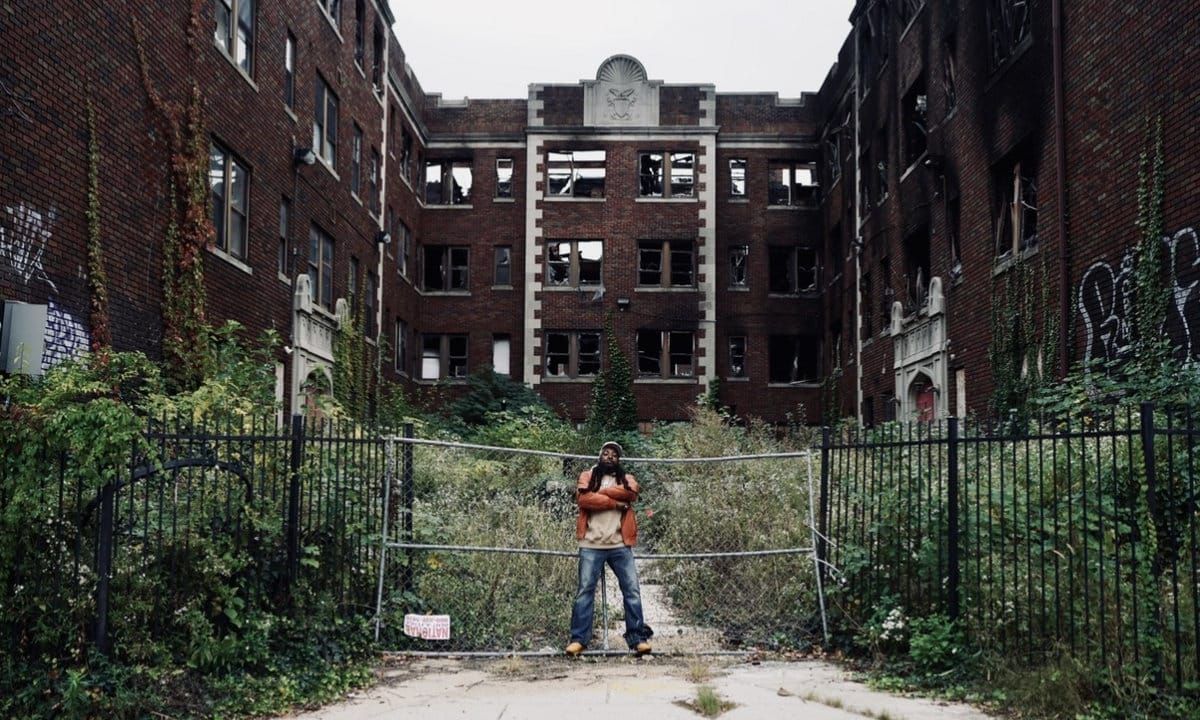
billy woods keeps calling Curly Castro, or maybe vice-versa. I can hardly help but eavesdrop, one-sidedly, as the ShrapKnel rapper sits adjacent to me in the booth of this all-day Williamsburg cafe in anticipation of decent breakfast tacos. He recaps for his Backwoodz Studioz benefactor how the previous night’s concert at Elsewhere went–having opened in his dynamic duo with PremRock for Black Milk and Fat Ray outta Detroit–while attempting to coordinate a late morning get-together before making his way back to Philly.
Outside later, he’ll ceremonially roll and smoke his weed, which I demurely abstain from like a consummate writerly pro, while we kill time pleasantly chatting about music journalism, RZA As Bobby Digital Presents Digital Bullet, and our old respective outer boro antics before he ultimately heads to meet woods. This is the implicit comfort of two native New Yorkers communing—he originally of Brooklyn, me eternally of Queens—that this city’s flyover state transplants can’t comprehend or seemingly don’t care to. Castro asks if, as a teen, I ever went to The Bronx, to which I replied with some variant on, what would be the point? He concurs, naturally, intimately aware that the only reasons to travel across New York’s invisible lines as sentient young men are for family obligations, nightlife functions, and girls about your age.
In this town, you truly have what you need within a 10-15 block radius. Food, entertainment, infrastructure, the whole damned apparatus, walkable as hell. To venture beyond this near-mile strut requires either incentive or intent.
That ethos of location-based existence is at the core of blaxploitation cinema, one of the central influences on Castro's imminent new solo album Yaphet, as in Kotto.
"Sometimes I'm drawn to, I guess, the non-Hollywood types, the untraditionals," Castro says of the late Mr. Kotto. "He has unique looks; he has what we'd call a difficult name to most American lips. He pushed through that and still was an icon in his field."
This third-identified NYC native first appeared on the big screen roughly a decade before featuring in the two of the cinematic sub-genre's seminal data points: Across 110th Street [NYC] and Truck Turner [Los Angeles]. To go by author Josiah Howard's definition from his handy reference guide on the matter, being "1970s black-cast or black-themed films... created, developed, and most importantly, heavily promoted to young, inner-city black audiences," that also includes Kotto's roles in Paul Schrader's directorial debut Blue Collar [Detroit], Larry Cohen's pre-Black Caesar home invasion flick Bone [Beverly Hills], and Arthur Marks' PG-rated romp The Monkey Hustle [Chicago].
"I always fucked with him," Castro adds, citing 1979's Alien and TV's Homicide: Life on the Street among his personal cinephile faves while expressing surprise at Kotto's final on-screen appearance in Larry The Cable Guy's 2008 flop Witless Protection. "I root for underdogs and the known unknowns."
This is indicative of the sort of emcee Castro is, one who has a tendency to title his albums after such notable names, evidenced by 2015's FIDEL and 2018's TOSH, but also tragic figures like the martyred teenaged Black Panther of Little Robert Hutton. But such thematic signifiers never mire him in the concept album muck, instead helping to direct his concussive craft towards something bigger than inspiration. For instance, Kotto's filmography stops the same year that the first Iron Man hit theaters, separating him from the comic book blockbuster age. But connoisseur Castro uses the X-Men gallery of enhanced guys and dolls to color the Funkdoobiest-nodding single "SuperDOPE," its cartoony music video conveniently set on Earth-420.
"I have the GZA bug," he says, before remarking on the "fanciful" monikers assigned to both heroes and rogues cited therein. "Whether you get the reference or not, it still sounds somewhat beautiful."
Later on Yaphet, which incidentally is produced by the Milwaukee-based Locust, Castro introduces a trio of up-and-coming underground spitters–shemar, blackchai, and Sunmundi–via the posse cut "New Mutants," another nod to the Marvel machine but also so much more. "They're young and they get it at that age," he says of their still-emerging talents. "When I was young, I didn't necessarily get it, so it's really encouraging to see cats that really want to put the work in."
At Castro's grown-ass age, one more or less parallel with that of yours truly, it's an altogether new phenomenon to encounter folks from the next-next generation of artists who, in their art, reflect in some way what you and your peers do. "Especially when you delve in obscurities or indie pockets," he says, "you don't know if people are paying attention in terms of and inspiring their work."
From his POV, he's offering a helping hand where he can to those choosing to enter rap in a somewhat parallel way. And in this period of online consumption fueled by vanity, it might be more necessary than ever to preserve the integrity of the culture itself. "I think there's a value in somebody taking on their wing, even if it's in little short bursts," he says. The jewels you get are immeasurable. You can't replicate that, for somebody to sit you down and give you some game.
"As a generation, we might've lost the value of apprenticeship, really studying other people and then having your shot," he says. "We lost that because of exploitation, people taking ghost beats and not giving people their credit."
For the studious youth paying attention, Yaphet opens on a masterclass showcasing a certain caliber of indie rap excellence. Truly, where else but the Afro-centric "Black Don't Crack" could you find a posse cut boasting bars by AJ Suede, Blueprint, Brian Ennals, Fatboi Sharif, SKECH185, and the aforementioned billy woods? And as the opening track, to boot? The answer is, you just fucking can't. Indeed, the very existence of this song is a trouncing repudiation of the odious notion that lyricists of intellect on this, our most digable of planets, chiefly connect with a white listenership.
"I knew, not actively, nobody really starts their record with a posse cut, per se– maybe Boot Camp Clik," Castro says. "And as we move forward, each track gets a little bit more advanced in terms of the sonics used." He credits this quasi-chronological journey through hip-hop sound to Locust, who some fans may recall from Little Robert Hutton and select Wrecking Crew releases. "Some of the samples were my choices and some of the ideas were headed by me. I would send him things and then he would craft them."
But approaching elder statesman status in hip-hop means carrying lived experiences too, and Castro brings some particularly tough ones to the table for Yaphet's more overtly autobiographical moments. Mortality comes in heavy here, as he broaches topics including the deaths of his father and his daughter–movingly so on "I Couldn't Breathe, If I Wanted To..."–as well as his own history of health problems. "It's not just about the last four years; it's just the last four years allowed me to articulate," he says.
With the closing "Last Good Will," we bear witness one of the most reflective and vulnerable moments in Castro's entire catalog. "I tried earnestly to write something different," he says, pushing back on his poetic impulses. "Because of what's going on, I don't want to be cryptic or morbid. But again, this is a very honest record."

Three new tracks to snack on...
Mike Ladd, "Twenty Five (feat. Tom De Geeter)"
GDP, "Island In The Sky"
Mez, "Platinum Fubu (feat. UMI)"